Towards Downing Street

United Kingdom: Andy Burnham appointed leader of the Labour Party

At an extraordinary Labour Party conference held today in London, the former mayor of Manchester and sole candidate to succeed Keir Starmer has officially become the party leader

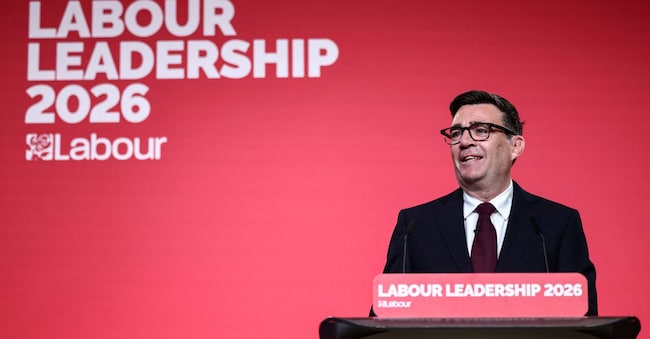
Andy Burnham interviene dopo essere stato confermato nuovo leader del Partito Laburista e prossimo Primo Ministro del Paese, durante la “Conferenza straordinaria del Partito Laburista” tenutasi a Londra, in Gran Bretagna, il 17 luglio 2026. HENRY NICHOLLS/Pool via REUTERS via REUTERS

3' min read

Translated by AI
Versione italiana

3' min read

Translated by AI
Versione italiana

LONDON – Andy Burnham has been appointed leader of the Labour Party, the final crucial step in his rapid rise to Downing Street. At an extraordinary Labour Party conference in London today, the former mayor of Manchester and sole candidate to succeed Keir Starmer has officially become the leader of a party he has been a member of since he was 15.

Shabana Mahmood, the current Home Secretary and Chair of the Labour Party’s Executive Committee, stated that Burnham had received the support of 379 Labour MPs, 95 per cent of the total, as well as the backing of the 11 trade unions affiliated to the party, and has therefore appointed Burnham as leader.

Loading...

“I’m ready and I have a plan,” said Burnham in his first speech, which was met with a standing ovation. The new leader stated that the government he will lead will be “resolutely Labour in our priorities and in the decisions we take, putting people and places at the heart of everything we do”. In practice, this means greater public control of the economy and a reindustrialisation programme which, he promised, will bring “growth to every postcode” in the UK, and not just to affluent London and its surrounding areas.

The new leader has pledged to change course, steering the country towards “a new path away from the neoliberalism pursued over the last forty years”, and has criticised in particular the decision taken in the 1980s to centralise political power in Westminster and embark on privatisation. “This economic model has not worked for workers,” said Burnham, recalling that the Labour movement was “forged in factories, mines and shipyards” and must return to its roots.

Priorities

Outlining his priorities, Burnham said he wants to unite the Labour Party, which is too divided into factions, because “only by standing united can we defeat the right”. He intends to form a government that reflects “all strands of Labour”, to make politics “less toxic”, but also to bring about radical and lasting change, with reforms in sectors such as social care that have so far been neglected because they are too complex.

During his nearly ten years as mayor of Manchester, Burnham has successfully revitalised the city’s economy by fostering close collaboration between the public and private sectors, and has regained control of the city’s public transport system, which had been on the brink of collapse. Today he promised that, as a leader, he would remain “close to the people” and continue to listen to the views “of people in shops and pubs, rather than think tanks”; he will bring down the cost of living for everyone, decentralise power by making politics less London-centric and, above all, restore “hope to every heart”.

He will become Prime Minister on Monday

Burnham has not yet presented a government programme, out of respect for due process – given that he will not become Prime Minister until Monday – and also out of respect for his predecessor, who is absent today as he is in Ukraine. In his speech, the new leader paid tribute to Starmer, acknowledging the decisive role the outgoing Prime Minister played in revitalising the party and leading it to a resounding electoral victory in 2024. Burnham also highlighted the government’s successes in strengthening workers’ rights, investing in public services, reducing hospital waiting lists, nationalising the railways and restoring the UK’s reputation on the international stage.

On Monday morning, Starmer will deliver his farewell speech at Downing Street, and shortly afterwards Burnham will officially become Prime Minister of the United Kingdom. He is expected to announce the names of his key ministers on the same day. There is particular anticipation surrounding his choice for Chancellor of the Exchequer, which will give a clear indication of his views on how to manage public finances. The frontrunners are Ed Miliband, the current Environment Secretary and a close ally of Burnham – who is unpopular with the City because he is considered too left-wing – and Mahmood, who is instead seen as a centrist who would reassure the markets.

Copyright reserved ©
Loading...

Brand connect

Loading...

Newsletter

Notizie e approfondimenti sugli avvenimenti politici, economici e finanziari.

Iscriviti