
Unitree plummets in Shanghai: Beijing tightens the screws on humanoid IPOs
Since its share price peaked in mid-August, the group has lost more than 50 per cent: the Chinese stock market authorities are calling for stricter requirements for companies in the sector seeking to list

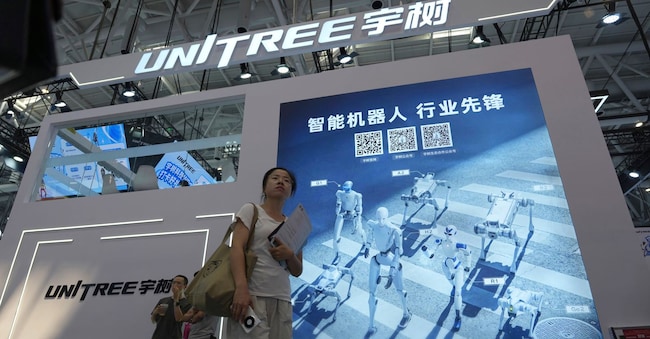
Everyone remembers the record-breaking debut of Unitree, the Chinese humanoid manufacturer which, on 19 August, closed its first trading session on the Shanghai Stock Exchange at 845 yuan, marking a 460 per cent surge compared to its IPO price. Few people, however – except perhaps those who bought a share that day at a price 1,300 times its earnings – are aware that, at yesterday’s closing price (513 yuan) Unitree Robotics had fallen by 53 per cent from the high it reached, also on 19 August, of 1,100 yuan.
Among those few are, in any case, the Chinese market regulators, who, in light of the share price’s collapse in recent weeks, have decided to take action to make the IPO approval process for humanoid robotics start-ups more rigorous. After all, it is no secret that, following Unitree’s boom debut, the list of companies in the sector – whether prospective candidates or already in the process – has grown exponentially, to list on the Shanghai Stock Exchange to capitalise on the favourable trend and secure favourable valuations, with the support of investment banks ready to put deals together in record time.
Three conditions for new humanoid IPOs
Thus, according to a report by the American investigative publication “The Information”, the China Securities Regulatory Commission has provided informal guidance to investment banks and companies, consistent with a tightening of listing standards on the financial markets. Essentially, for their applications to be considered, these companies will need to provide sufficient assurances on three points. Firstly, they will need to demonstrate that they are capable of generating recurring revenue, which means consistent cash flows and long-term commercial contracts, rather than one-off payments from individual prototypes.
Secondly, regulators require a clear and sustainable financial path towards profitability: it could be argued that Unitree is already generating profits, but the same cannot be said of other firms in the Far East. Finally, there is a technological requirement: start-ups must demonstrate that they hold patents and have made significant proprietary discoveries; those who ‘copy’ existing models are therefore barred. Which, when one considers the story of the Chinese firm Deepseek – poised for an IPO after being accused of drawing heavily on OpenAI’s models – sounds almost paradoxical.
A move to protect the retail sector as well
According to Beijing’s plans, all this should at the very least cool down the IPO fever in the world of Chinese tech firms and prevent the overheating (which could turn into a bubble) of a sector considered strategic by the Government, particularly in the head-to-head race with the United States for technological supremacy, starting with artificial intelligence. The aim would also be to protect retail investors, although the most recent results in this regard have not been particularly impressive.


