
Urban ecosystem, extreme climate hits Emilia-Romagna's primates

3' min read
3' min read
"We have to take note that by now basit takes one day of rain with these intensities to bring the territory to its knees again." "The canal network is no longer adequate, not for rainfall of this kind."
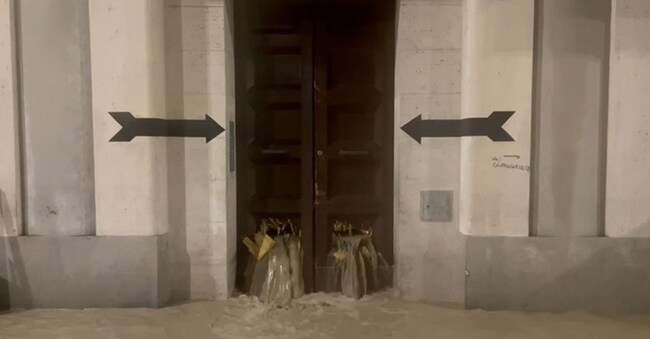
Affirmations from local administrators after the fourth flood that hit Emilia-Romagna in less than a year and a half. Six of the cities representing the region are among the top 12 in the general classification of Ecosistema urbano, drawn up by Legambiente and Ambiente Italia. Bologna, eighth, is the first 'metropolis' to make it into the top ten. That's right, Bologna, which about ten days ago saw its streets largely end up under water. Buried torrents broke through roofs and caused extensive damage to individuals and businesses. Someone, to give an idea, made a comparison: as if the contents of a tanker truck had poured into a bathtub.
Armando Brath, professor of Hydraulic and Maritime Constructions and Hydrology at the University of Bologna and president of the Italian Hydrotechnical Association, also speaks of 'unusual events' for these areas. "Based on the historical data in our possession," he explains, "it was conceivable that a single flood like the one that hit the region could occur every 200 years or more. Of course climate change has something to do with it, but the region's weakness is also due to a series of concauses. And I am not talking at all about Emilia Romagna alone, nor about a period to be confined to recent years. I am talking about going much further back, at least as far as the 1960s. I would even say that for centuries space has been taken away from rivers, which have become narrow ribbons running through the territory, sometimes even buried in urban centres; then there is the consumption of land that in Italy is almost double the European average and the depopulation of mountain territories, where the work of farmers was very important from a hydrogeological point of view'.
What can be done, then, to raise the level of land protection? "Complex interventions, which can take a long time, must be put in place. Enlarge the river beds, in the few places where it is possible to do so in anthropised areas, create expansion reservoirs, mountain reservoirs, flood drains and, where it is not sufficient, plan controlled flooding areas in less valuable areas. We also need more resources, but let us bear in mind that in Italy, over the last 25 years, about 3.5 billion euro have been spent each year on repairing damage and building 'ex post' safety works, and no more than 300-350 million for prevention'.
There are numerous indicators from the Legambiente survey in which the cities of Emilia-Romagna historically prevail... 'This confirms that on an environmental level the region has no more shortcomings than the average, on the contrary. But at this point even a parameter dedicated to hydrogeological protection would be considered useful and topical'.

