
Urban ecosystem, sprint of large centres against smog and traffic

2' min read
2' min read
In Bologna, Florence and Turin, cycle paths are spreading. In Catania, there is a sprint in differentiated waste collection. But, on the other hand, the number of cars per 100 inhabitants continues to grow in the Piedmontese capital and, to a lesser extent, in Rome and Milan. These are the main trends that jump out at you from the historical analysis of Urban Ecosystem indicators in the ten largest metropolitan cities.
Shared by the 'struggle' to get out of urban chronicities (smog, traffic, waste, water dispersion and land consumption), Italian metropolises nonetheless mark progress in urban environmental policies.
The 'jump' in differentiated waste collection (up from 44.9% in 2016 to 72.9%), for example, allows Bologna to climb the Legambiente ranking of the greenest cities, placing it in the top ten, also thanks to the increase in local public transport passengers and cycle paths.
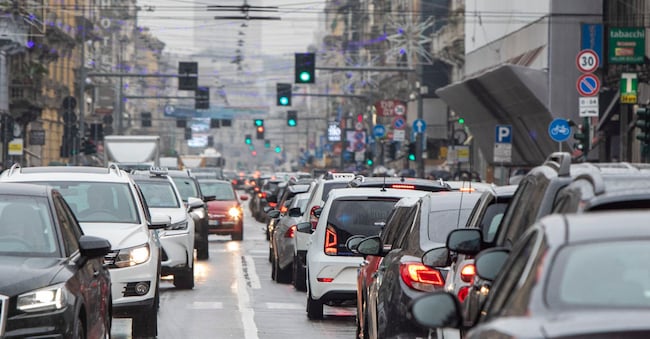
Only Turin and Rome exceed or come close to the national average of 67 cars in circulation per 100 inhabitants (69 and 66 cars respectively), while in the other eight metropolitan cities surveyed, the representative city traffic index remains lower (with Genoa and Milan each recording 48 and 52). At the same time, in the large urban centres, pedestrian areas are increasing, reaching almost 116 square metres per inhabitant in Florence, with the greatest increases in the last year in Catania and Palermo.
However, the figures for the main urban emergencies remain impressive. For example, those linked to nitrogen dioxide concentrations in Naples, Milan, Turin, Palermo and Catania. Or the days on which ozone limits were exceeded at the worst control unit in Genoa or Milan. Catania also once again has the highest number of cars (79 per 100 inhabitants).

