
Tariffs on cars: US pressing, EU racing against time
US Ambassador to the EU Puzder warns that Washington will apply 25% tariffs on cars and trucks from the EU 'relatively soon' if the EU does not ratify the trade agreement quickly. Parliament and Council remain divided over safeguards to be included in the deal
by our correspondent Bede Romano
 Aggiungi Il Sole 24 Ore
ai preferiti su Google
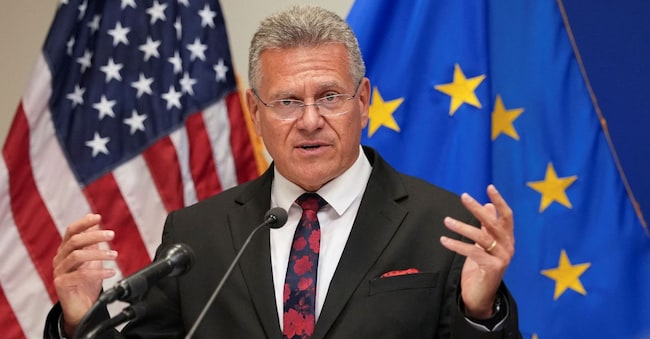
BRUSSELS - Almost a week after the resounding announcement of new US tariffs on cars and trucks imported from the European Union, the relationship between Washington and Brussels still appeared on thin ice. From the American side came new trade threats, despite the White House's warnings that the all-EU negotiations on two regulations that are to put last summer's agreement into practice were likely to be accelerated.
Let us briefly recall the background. In July last year, Washington and Brussels reached an agreement to stabilise their trade relations. The agreement provides for an almost horizontal 15% tariff on the American side and a reduction of European tariffs on many American industrial products. For weeks now, Parliament and the Council have been negotiating an agreement on the two regulations that put the understanding into practice.
A meeting between EU negotiators in the evening
Barring any surprises, many diplomats expected in the run-up to the meeting that at least one further round of negotiations would be necessary. There is, however, a shared goal of accelerating the decision-making process - at first a further meeting between the negotiators was scheduled for 10 June; there were rumours that it could be brought forward to 19 May (in the absence of agreement overnight).
Prior to the meeting, diplomatic representatives of the member states met here in Brussels. One diplomat explained: 'The discussion was very consensual. There is no intention to include measures in the texts that would go against the agreement' of last summer. Another diplomat spoke of 'constructive discussion'. Some countries are more combative than others (France, Spain), but in general the Twenty-Seven want to send a distensive signal to Washington for the time being.
The negotiations on the two regulations between Parliament and Council are not easy
While the Twenty-Seven accepted the Commission's legislative proposal with minimal changes, the Parliament introduced quite a few safeguards, some of which are very controversial in the eyes of the Council. Furthermore, there are also tensions between the political camps. The People's Party is pushing for a quick agreement, bypassing the trialogue and voting in plenary on a preliminary text already in May.

