
US elections: the spectre of ICE agents looms over the midterm polls
Trump did not threaten any major anti-immigrant crackdowns during the election in his mid-term speech, but his aides have not ruled them out

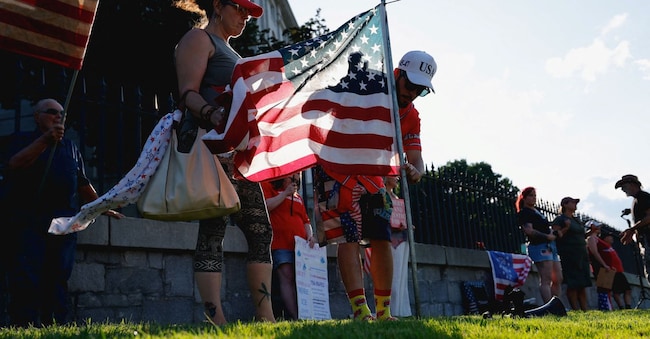
In his speech on the mid-term elections and the security of the ballot boxes, Donald Trump did not openly threaten to carry out anti-immigrant raids at polling stations or in their vicinity. However, the Trump administration is considering a wide range of security measures for the upcoming elections, and as things stand, these do not rule out the deployment of ICE agents, border guards or federal personnel.
This information has been leaked by some of the White House’s closest aides: in the last few days alone, the incoming Director of National Intelligence, Jay Clayton, has carefully avoided stating during parliamentary hearings that the President had lost the 2020 election, effectively legitimising his claims and the possibility of crackdowns. The acting Attorney General Todd Blanche, who has yet to be confirmed by Congress, has not commented on the idea of federal agents being stationed near polling stations, merely stating that he ‘will follow the law, whatever it may entail’.
The ICE at the polling stations
The law generally prohibits armed troops from guarding polling stations, with very few exceptions, such as the need to repel enemy attacks. However, a number of recent court complaints have already reported the presence of ICE anti-immigration officers at polling stations in California and Texas during the primaries.
This is despite the fact that undocumented and illegal immigrants do not have the right to vote, and repeated investigations have shown that cases of possible irregularities are extremely rare, despite the White House’s allegations of widespread fraud. A study by the Brennan Centre on the 2016 election found only 30 cases of suspicious ballot papers out of 23.5 million votes, equivalent to 0.0001 per cent.
The Secretary for Homeland Security, Markwayne Mullin, clarified that ICE officers under his command might be present not for the purpose of ‘intimidation’ but to address ‘specific threats’, which he did not, however, elaborate on. In the past, during a speech to an ultra-conservative audience, Blanche had pressed the point, stating that she ‘did not understand the objections to sending ICE officers to polling stations’.


