A solid answer

US GDP growth picks up on the back of investment in AI

The US economy grew by 3.4 per cent (annualised) in the third quarter despite the wars. Spending by technology firms rose by 12.7 per cent. PCE inflation jumped to 3.6 per cent.

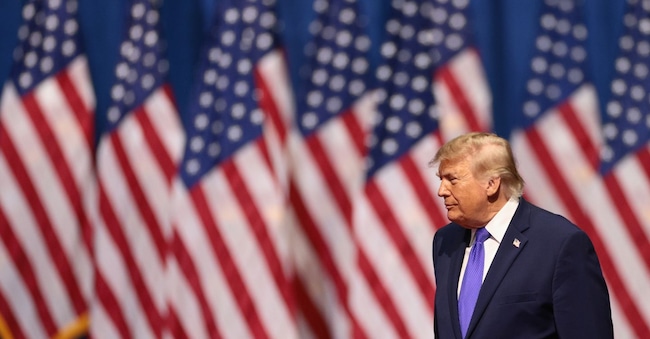
Donald Trump durante un comizio elettorale a Rock Hill, nella Carolina del Sud APN

3' min read

Translated by AI
Versione italiana

3' min read

Translated by AI
Versione italiana

The US economy grew at its fastest rate in the past year during the third quarter, weathering the rise in oil prices caused by the war in the Middle East: the stronger-than-expected GDP growth – 3.4 per cent on an annualised basis – was driven by robust consumer spending and, to an even greater extent, by massive investment in artificial intelligence by major technology firms.

With the mid-term elections just a few days away, Donald Trump is right to highlight the strength of the US economy. But overall economic growth cannot make up for the difficulties faced by households: the high cost of living is largely caused by the war in Iran and the tariff battle sparked by the Republican administration.

Loading...

The Personal Consumption Expenditure (PCE) index (the Fed’s preferred indicator) showed that prices in September rose by 3.6 per cent compared with the same month in 2025, with a 0.5 per cent increase – the sharpest rise since March. The core PCE index, which excludes the volatile components of energy and food, rose by 0.3 per cent month-on-month and 3.1 per cent year-on-year.

These figures are in line with expectations, though they show inflation well above the 2 per cent target set by the Federal Reserve. This explains the discontent amongst voters who are having to cope with further price rises, after prices have risen by an average of 30 per cent over the last six years: not only for fuel but also for food, healthcare and housing.

For Trump, inflation remains the toughest challenge to tackle in these mid-term elections, in which the Republicans could lose not only their majority in the House but also control of the Senate.

In any case, the US economy as a whole has shown signs of strength. Between July and September – according to preliminary data from the Department of Commerce released yesterday – US GDP grew by an annualised 3.4 per cent, following a 2.2 per cent increase in the second quarter. Household spending proved robust, rising by an annualised 3.8% for the second consecutive quarter, despite the continuing erosion of purchasing power and the decline in consumer confidence.

Business investment, particularly in the technology sector, grew by 12.7 per cent on an annualised basis: this is the highest figure since 2020 and indicates a greater contribution to GDP growth than in any other period since 2011 (excluding the post-Covid recovery).

“The data show that the economy is performing rather well beneath the surface,” said Andrew Husby, senior US economist at BNP Paribas. “The figures also confirm that the economy is being underpinned by the development of artificial intelligence and the associated positive factors, although this is not the sole driver of economic growth.”

Net exports, on the other hand, reduced third-quarter GDP by 3.3 percentage points. And with lending rates rising to 7.5 per cent, the property market and the construction sector have been held back.

“Although consumer spending has proved very resilient so far, we expect a slowdown in the future,” said Marc Giannoni, chief US economist at Barclays Plc. “Even after adjusting for inflation, income growth is not having a significant impact, and households have had to dip into their savings.”

Loading...

The markets are also on edge over the way the Trump administration is managing public finances. Outstanding US debt has exceeded the symbolic threshold of 100 per cent of GDP: this has not happened since 1946. Public debt stood at $32,200 billion as at 30 September. Meanwhile, the budget deficit, at nearly 2,000 billion dollars, has reached 6.2 per cent of GDP. Total public debt, which also includes debt across different levels of government, has already surpassed the 40,000 billion dollar mark, equivalent to approximately 124 per cent of GDP.

Copyright reserved ©
Loading...

Brand connect

Loading...

Newsletter

Notizie e approfondimenti sugli avvenimenti politici, economici e finanziari.

Iscriviti