
US court suspends Trump sanctions against Francesca Albanese
The US administration's measure against the UN Special Rapporteur on the occupied Palestinian territories is said to have been taken with the intention of "punishing" and "repressing unwelcome expressions", thus infringing on the rights protected by the First Amendment

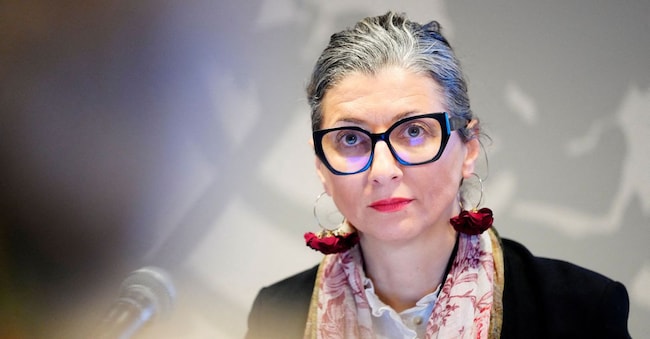
Francesca Albanese, the United Nations Special Rapporteur on the occupied Palestinian territory, announced that a District of Columbia court in Washington has suspended the sanctions imposed against her by the Trump administration. In a post on X, Albanese reported that the judge ruled that 'protecting free speech is always in the public interest', thanking her daughter and husband 'for coming forward to defend me, and everyone who has provided help so far' on the basis that 'together we are One'.
U.S. District Judge Richard Leon ruled that the Trump administration likely violated Albanese's First Amendment rights when it imposed sanctions on her in July 2025, with measures appearing to directly target her statements critical of Israel, deciding to suspend them temporarily.
Albanese has served as UN Special Rapporteur on the Palestinian territories since 2022, whose recent work has focused on the Israeli military campaign against Hamas in Gaza. She accused Israel of committing 'genocide' and human rights violations in Gaza, and referred a number of Israeli officials to the International Criminal Court (ICC) for possible prosecution, including Prime Minister Benjamin Netanyahu.
Albanese's husband, Maximilian Cali, filed the lawsuit in February acting on behalf of himself, his wife and their daughter, claiming that the State Department's 2025 sanctions violated his wife's free speech rights.
Leon, a judge appointed by former President George W. Bush, noted that "if Albanese had instead opposed the ICC's action against US and Israeli citizens, she would not have been placed on the list of persons sanctioned under Executive Order 14203," in a 26-page reasoned opinion. "Therefore,the effect of Albanese's designation is to 'punish' and, consequently, to 'suppress unwelcome expressions'." The judge also ruled that Albanese enjoyed the protection of the US Constitution, despite residing outside the country, finding that he possessed 'substantial' ties to the US, sufficient to assert rights guaranteed by the First Amendment.

