
US duties, Macron to French firms: stop investment in US until clarification. Spain allocates 14.1 billion to protect companies
The US President's new tariff regime against all countries threatens to trigger a global trade war. Here are the reactions of individual countries

9' min read
9' min read
Global markets and businesses reacted with great concern to the announcement of a new wave of tariffs by US President Donald Trump. The new tariff measures, which affect both major trading partners and emerging economies, represent the biggest overhaul of global trade rules since World War II.
The new policies provide for a basic 10% tariff on all imports into the US, with peaks of more than 50% for some countries. Trump justified these measures by claiming he wanted to correct decades of unfair trade practices that would have hurt the US economy.
The universal duty of 10% will come into force on 5 April, while the so-called 'reciprocal duties', which are specific to certain countries, will apply from 9 April.
Global impact and international reactions
.Trump imposed a 20% tariff on products from the European Union, while Mexico and Canada were spared from the new tariff package, but remain subject to previously introduced 25% duties. The announcement caused Asian markets to slump, while the world's major economies are considering countermeasures.
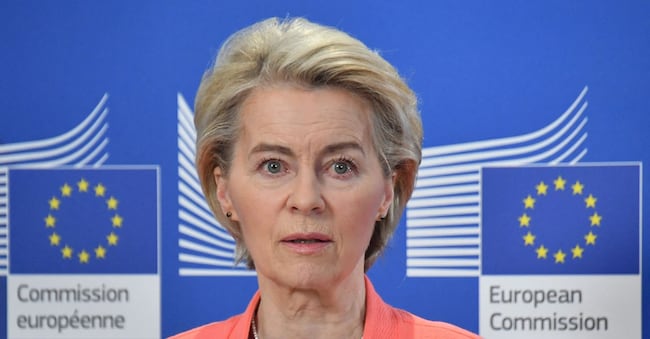
The President of the European Commission Ursula von der Leyen commented as follows: "The universal US tariffs are a blow to the world economy, which will suffer enormously: uncertainty will spiral upwards and trigger further protectionism with disastrous consequences for millions of people: they will be felt immediately, millions of citizens will face higher shopping bills, medicines will cost more as well as transport, inflation will rise. From increased uncertainty to disruption of supply chains to burdensome bureaucracy, the cost of trade relations with the US will rise dramatically'.
Here is how individual countries reacted.
France, Macron to French companies: stop investment in US until clarification
French President Emmanuel Macron has called on French entrepreneurs to suspend US investments until there is further clarification on the duties. He said this during a meeting with business representatives from categories affected by Donald Trump's tariffs at the Elysée Palace. Macron called the list of new tariffs 'exorbitant' and worrying and assured that at the European level, 'there will be a response'. The first phase will take place in mid-May in response to the taxes already decided, namely those on steel and aluminium. A second phase will provide a European response, 'sector by sector', to the tariffs announced yesterday, the Elysée chief said.
Emmanuel Macron spoke of the duties as a 'brutal and unfounded' decision, 'a shock for international trade'. "You do not correct trade deficits by putting duties in place," said the head of state, admitting later that these taxes will have a "massive impact" on the European economy.
"One thing is certain, with last night's decisions, the American economy and Americans, whether we are talking about businesses or citizens, will come out weaker than yesterday, and poorer," Macron said. The French head of state appealed to Europeans to "remain united" and not to attempt "solitary adventures".
Spain allocates EUR 14.1 billion to protect its companies
Spain will deploy a EUR 14.1 billion package of measures to protect its companies and jobs from US duties. This was stated by Prime Minister Pedro Sanchez.
In a public speech, the Social Democratic leader said Spain will act immediately to cushion the impact of the 20 per cent tariff announced by US President Trump on imports from the European Union.
The tariffs are "bad news" for Europe and Spain, but this does not mean the Spanish economy will stop growing, he said, adding that the leftist coalition government will protect the middle class, businesses and the self-employed with "all the resources of the state".
"Trump has decided to unilaterally attack the EU," Sanchez added. "This is unprecedented, this is tantamount to a return to 19th century protectionism. It is not an intelligent way to deal with the challenges of an interconnected world." Spanish producers of steel, olive oil, wine and biofuels are among the most exposed to the new US tariffs.
Budapest: 'EU incompetent, price of duties on citizens'
"The European economy and its citizens are once again paying the price for Brussels' incompetence. Yesterday's US tariff decision made one thing clear: the European Commission should have negotiated. They had two and a half months. They did nothing'. The Hungarian foreign minister, Péter Szijjártó, writes this in a tweet. "Instead of working with Washington to reduce duties on cars from 10 per cent to 2.5 per cent US, they did nothing. They turned an economic issue into an ideological issue and still brought home thousands of euros a month...," he adds.
China
China is among the hardest hit countries, with total duties exceeding 50 per cent. The Chinese Ministry of Commerce called on the US to 'immediately cancel' the duties, warning that these measures 'threaten global economic development'. Beijing announced countermeasures, including possible retaliatory tariffs, devaluation of the yuan and restrictions on rare earth exports to the US.
A hard blow also comes with the termination of the so-called 'de minimis rule', which allowed the import of goods under USD 800 without duties. This measure will hit fast fashion giants such as Shein and Temu, which benefit from this scheme to sell in the US, hard.
United Kingdom
Trump hit the UK with 10% tariffs. Downing Street, which had expected a 20% tariff to be imposed, therefore expressed relief. Keir Starmer's more conciliatory approach to the Trump administration thus seems to have paid off.
However, UK growth forecasts are likely to be downgraded and tariffs could cost thousands of jobs and force the government to implement further spending cuts or tax increases in the autumn.
The British government is 'disappointed' by the imposition of US tariffs but is committed to reaching a trade deal with Donald Trump's administration, said the Minister for Business, Jonathan Reynolds, reporting to the House of Commons. Reynolds emphasised that an understanding with Washington 'would not only avoid the imposition of heavier tariffs, but would deepen our economic relationship', and at the same time announced a consultation with the country's companies on possible future retaliation against the US.
South Korea
South Korea, hit by 25% tariffs, called the situation 'very serious' and is preparing a contingency plan. The automotive industry, which exports almost $35 billion worth of cars to the US, will be one of the hardest hit.
"As the situation is very serious with the approaching reality of a global tariff war, the government must deploy all the capabilities at its disposal to overcome this trade crisis," said Acting President Han Duck-soo.
Japan
Prime Minister Shigeru Ishiba said: 'Japan is a country that is making the most investments in the United States, so we wonder whether it makes sense for [Washington] to apply uniform tariffs to all countries.
Trade and Industry Minister Yoji Muto called the tariffs "extremely regrettable" and said Tokyo is still trying to convince the Trump administration to reconsider. "I conveyed that the unilateral tariff measures taken by the United States are extremely regrettable and again strongly urged Washington not to apply them to Japan," Muto told reporters.
The Tokyo stock exchange reacted negatively, with the Nikkei Stock Average plummeting 4 per cent at one point, bringing the benchmark index to its lowest level in eight months. "We expect an extremely difficult start for Asian equity markets this morning," Tony Sycamore, market analyst at IG Australia, wrote in a note, according to Nikkei Asia. "Brace yourselves folks... uncharted waters lie ahead."
Japanese car manufacturers are also bracing themselves for a collapse in exports. Goldman Sachs said that the levies would have a 'significant' impact on Japanese car and auto parts manufacturers, as vehicles account for more than 30% of Japanese exports to the US.
India
India woke up to the news of a 26% tariff on all goods imported into the US. Trump had called India 'very, very tough' with its tariffs and said the 26% was a 'reciprocal discounted tariff' for the 52% tariffs imposed by Delhi.
The Ministry of Commerce is analysing the impact of the tariffs, a senior government official said on Thursday. "This is a mixed result and not a setback for India," he added.
In recent weeks, the Indian government has been working hard to negotiate tariff concessions. Almost $14 billion worth of electronic products and over $9 billion worth of gems and jewellery are among the sectors most affected by the new tariffs, as are the textile and IT industries. However, it is good news for India that so far pharmaceuticals, one of its largest export industries, are exempt.
The US trade deficit with India currently stands at $46 billion and Trump has made it clear that tariffs will remain in place until this 'threat' is resolved. India is reportedly considering reducing tariffs on $23 billion worth of US imports, including gems, jewellery, pharmaceuticals and auto parts.
Australia
Prime Minister Anthony Albanese stated that, while recognising that 'nobody got a better deal' than Australia, the new tariff regime was a hostile act against an ally.
Australia has been relatively spared the impact of the new tariffs imposed by Trump, suffering only a generalised 10% duty. However, Albanese strongly criticised the measure: 'President Trump talks about reciprocal tariffs. But a reciprocal tariff should be zero, not 10 per cent,' he said. "These tariffs have no economic logic and undermine the principles of partnership between our two nations. This is not a friendly gesture."
Nevertheless, Albanese made it clear that his government will not impose retaliatory tariffs on the United States - trade between the two countries is currently free of tariffs - and emphasised that, in the end, it will be American consumers themselves who will pay the price for Trump's decisions.
Certain strategic minerals exported from Australia, and not available in the US, will be exempt from the new tariff measures.
New Zealand
Prime Minister Christopher Luxon stated that, compared to other countries, New Zealand was relatively unaffected with a 10 per cent tariff, but criticised trade wars, calling them 'the wrong way to go'.
"It will be about $900 million worth of duties that will burden New Zealand exporters, costs that will inevitably fall on US consumers," Luxon said. "This will lead to higher prices, fuel inflation and slow economic growth, creating global repercussions."
The PM then announced that he would seek clarification from the US on their claim that New Zealand imposes a 20 per cent duty on American imports. 'We do not understand how this figure was calculated,' he commented.
The US is the fastest growing export market for New Zealand and will become the second largest by 2024, overtaking Australia and trailing only China. Exports to the US will exceed NZ$9 billion, driven by meat, dairy and wine. With the new tariffs, New Zealand exporters will face an additional cost of about USD 900 million.
Canada: 25% duties on US cars not included in the treaty
Canadian Prime Minister Mark Carney announced 25% tariffs on American cars not included in the treaty between the US, Mexico and Canada.
Canada was exempted from the new tariffs, but continues to face 25% taxes on steel, aluminium and cars, which came into effect at midnight (Eastern time). Prime Minister Mark Carney promised a strong response: 'We will fight these tariffs with appropriate countermeasures and work to build the strongest economy in the G7'.
Carney acknowledged that Trump has maintained some key elements of the bilateral relationship, but emphasised that the 25% tariffs - justified by Trump as a punitive measure for the alleged failure to combat fentanyl trafficking to the US - remain in place.
Mexico
Like Canada, Mexico has been exempted from the latest round of tariffs, but remains subject to the levies already announced by the Trump administration. President Claudia Sheinbaum stated that Mexico does not intend to respond with punitive measures: 'We will not wage a tariff war,' she said, but announced a 'comprehensive programme' that will be unveiled in the coming days.
Taiwan
The Taiwanese government called the new tariffs imposed by the US 'completely unreasonable' and announced its intention to take up the issue with Washington. The 32% tariff imposed by Trump on the island will have a significant impact on its economy, considering that more than 60% of Taiwan's GDP depends on exports. In 2023, Taiwan had a trade surplus of almost USD 74 billion, and according to Bloomberg's forecast, the tariff increase could reduce GDP by 3.8%, due to a drop in exports to the US.
Prior to Trump's announcement, President Lai Ching-te had emphasised Taiwan's key role in the global supply chain and assured that the government would take measures to protect local businesses.
The American Chamber of Commerce in Taiwan urged both sides to maintain a constructive dialogue. "In an increasingly complex geopolitical environment, the US-Taiwan partnership is not only essential for economic prosperity, but also for supply chain and regional stability," it said in a note.
According to local sources, the Taiwanese government had been preparing a tariff response strategy for months, considering the option of increasing energy imports from the US and reducing its own tariffs to rebalance bilateral trade. Previously, Taiwan had tried to ease tensions with Washington, including through a $100 billion investment by TSMC in the US. The agreement, announced at the White House by Trump and the company's chairman, seemed to be able to secure an exemption from duties. However, the new measures have disproved this assumption.
Thailand
The Thai government expressed concern about the economic impact of the new duties, saying that Trump's measures 'will hit not only trading partners, but also the purchasing power of American consumers, who are unable to absorb the price increase'. Thai authorities called on local exporters to diversify their markets to reduce dependence on the US and announced support measures for the hardest-hit sectors. The government also reiterated its willingness to enter into dialogue with Washington to find a trade balance that would minimise the negative effects on both economies.
Brand connect

