Media

Usai (Anica): 'Cinema, sector at risk due to uncertainty over funds'

'The long timeframe for the new tax credit decree creates many problems'. Insiders' focus on the renewal of Rai Cinema's top management

by Andrea Biondi

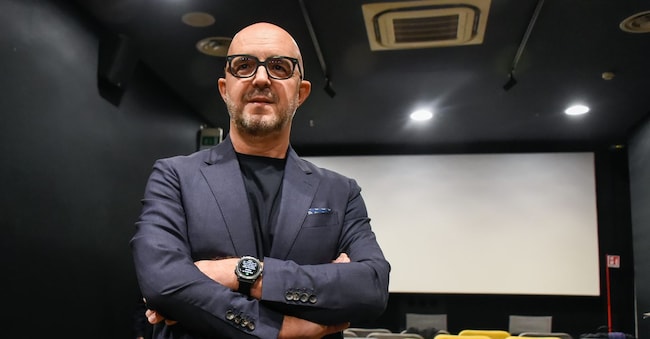
Alessandro Usai Presidente Anica Imagoeconomica

4' min read

Translated by AI
Versione italiana

4' min read

Translated by AI
Versione italiana

Italia cinema is on its feet, but there are cracks underneath. The cinema has given encouraging signs, with the start of the year driven by domestic titles and the summer promising thanks to American blockbusters. On 2 June there were 277 million box office receipts (+28%) for 36.57 million admissions (+21%) (Cinetel data). Even looking at it from the point of view of Italia cinema with co-productions, the 90.1 million box office receipts mark an increase of 16%, driven by the Zalone effect with his "Buen Camino".

But the industrial machine that must decide today on the films of 2027 and 2028 is proceeding with the brakes on. Node: once again the tax credit. The inter-ministerial decree, passed by the Mic, has remained in the Mef-Corte dei conti funnel longer than expected.

Loading...

It would now be ready for publication, very soon according to Sole 24 Ore. But on the subject Alessandro Usai, president of Anica, uses clear words: 'The Mic has done its part. The mechanism has slowed down elsewhere. Now, however, there is a real risk'. The fear is that the industry will get bogged down while the public seems to be returning to the theatres. 'We know the contents of the decree because they were explained to us verbally in meetings at the Ministry of Culture, but we do not have a final version and we are waiting for it to be published,' Usai explains.

The process was supposed to be quick. It was not. So businesses move 'on trust. If we had had to wait for the mathematical certainty of a published decree, everything would have stopped. Added to the production situation is then the suspension, by the TAR, of the tax credit distribution, which froze, following appeals, the funds for the film released from mid-2023 to today and to which we must also try to find a solution quickly'.

The paradox: the urgency is not just about tomorrow's money, but yesterday's money. 'The biggest battle we are doing is to speed up the liquidation of contributions from past years'. At stake are 'tens, hundreds of millions' of tax credits, selective and automatic contributions 'already approved, already published, but which for one reason or another never become cash'.

The mechanism, Usai explains, runs the risk of being exacerbated in this framework: the producer obtains the contribution, pays it off in the bank and finances the film. If the payout stretches out, the credit becomes a debt and the banks demand repayment. "We have dozens, hundreds of cases," warns the Anica president. "After the small ones, even Serie A companies are getting into difficulty".

The issue has therefore become systemic. "The issue is not whose fault it is. The issue is: we have to do something, sit down at the table together, technically, and solve these problems, because this is becoming more serious than resource cuts and risks having a devastating impact."

Anica is moving with the other main associations to find solutions. The request is not to open new cash. It is to free resources that have already been allocated: 'It is not that the sector is asking for more resources. It is a question of releasing resources that had already been allocated in previous years'.

In this context, Usai emphasises, 'our film industry cannot experience a further cause for concern and imbalance due to the expiry of the mandate of the top management of Rai Cinema. Which is the flagship company of our industry, the production and employment flywheel that is essential for the system's stability and balance thanks to the economic and editorial support that it has been able to give to hundreds of projects over the years'.

The sector, therefore, needs to count on the company's stability in order to ensure proper multi-year planning of Rai's investments: 'The risk of another deadlock in the system is causing alarm among producers, workers, talent and associations at a time when millions and millions of euros of Rai's investment must be defined for projects in 2026, 2027 and 2028'.

There are lights and shadows on the market. Italia's product 'always performs very well on television exploitation, especially pay-TV', from Sky to Netflix and Amazon, even if it 'depreciates the value of free'. The 2026 box office can hold up: 'We started off very well with Italia films, then there was a drop, but American blockbusters came out'. However, this is not enough. Between the decree that has been held up for too long, unpaid arrears, tax credit distribution blocked by appeals, and Rai Cinema governance, "when three or four critical issues start to arise, the risk of the perfect storm is there". To defuse it, 'a series of processes must be accelerated. The sector could get lost in these stops and its resilience is at risk'.

Copyright reserved ©
Loading...

Brand connect

Loading...

Newsletter

Notizie e approfondimenti sugli avvenimenti politici, economici e finanziari.

Iscriviti