
Space, Valente: 'With Japan we build an ecosystem that goes beyond missions'
The President of the Italian Space Agency, appointed head of Copuos for the next two years, talks about the agreements made between Italian and Japanese companies
by Lorenzo Pace
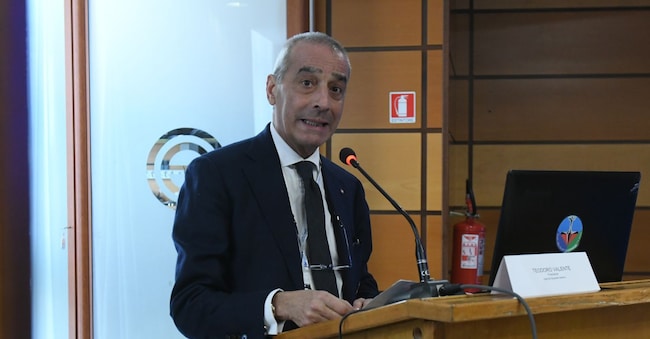
To speak only of space missions would be reductive. If anything, the bilateral between Italia and Japan, which took place between 28 and 29 May, served to nurture an 'ecosystem' of collaborations through new scientific and industrial agreements. This was claimed by those who played a central role during the Tokyo consultations, i.e. the Italian Space Agency (Asi), which met directly with the Japanese equivalent Jaxa. This ecosystem, for Agency President Teodoro Valente, must include everything around it - from institutions to companies - so as to become a lever for overall growth. An opportunity also helped by the solid relationship between the two countries, which is witnessed by Japan's support for Valente's chairmanship of the UN Committee for the Peaceful Uses of Outer Space (Copuos) for the next two years. The inauguration is expected in the coming days.
President, what are the main results that emerged from the Tokyo bilateral?
Cooperation between Asi and Jaxa has intensified on several fronts, in line with the 2024-2027 action plan. The objectives do not only concern new space missions: we want to create an ecosystem of collaboration between the 'space worlds', including institutions, companies and investment centres that are able to generate innovation, skilled employment and new market opportunities. These consultations have prepared the ground for the next visit to Italia by the Japanese Prime Minister, scheduled for around mid-June: we arrive with the shared vision of considering space not only as scientific research and exploration, but also as a strategic lever for innovation, industrial competitiveness and economic growth.
So, it also refers to downstream. In this sense, how is the cooperation with Japan going?
At the end of March, we renewed an agreement that strengthens a decade-long collaboration on Earth observation, one of the fastest-growing sectors of the space economy and also fundamental for security. The agreement extends the 2016 agreement to integrate the data of the Italian Cosmo-SkyMed constellation with those of the Japanese Alos radar satellites. Thanks to the new agreement, cooperation is also extended to the Alos-4 satellite, which was recently put into orbit and is now operational.

