
Vegetables, cabbage production worth 805 million euro and exports up 12%.
In the brassicas sector, Italy is among the world's top five producers: cauliflowers, broccoli, friarielli and turnip greens are the fifth most important fruit and vegetable product by value of foreign sales

2' min read
2' min read
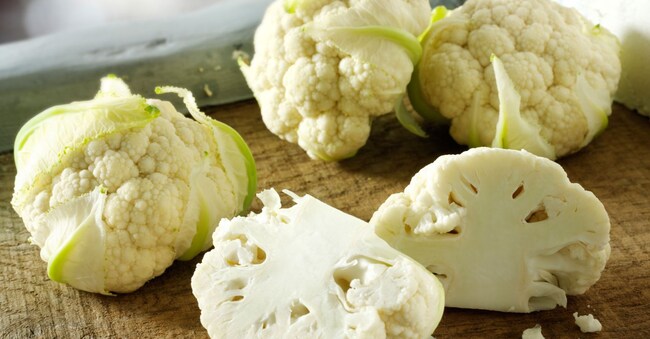
Man, what a business! The Italian brassica sector, of which Italy is among the world's top five producers and one of the biggest exporters, is worth 805 million euros in production. One fifth of the 684 million kg available of cabbages, cauliflowers, broccoli friarielli and turnip greens are sold abroad, generating 253 million euros in turnover. A figure that makes brassicas the second largest vegetable and the fifth largest fruit and vegetable product by export value, behind apples, grapes, kiwis and salads but before the much better-known and more emblazoned tomatoes.
Taking stock of this interesting sector, which is as significant in economic terms as it is underestimated as an expression of agricultural Made in Italy, was the first national brassica day, which involved university researchers, seed companies, producers and retailers, allied in the conviction of the need for greater valorisation of this Italian agricultural excellence.
Of domestic consumption, 20% goes to restaurants, 14% to the food industry and the remaining 66% goes to the consumer market, where brassicas account for about 6% of the quantities and 5% of household expenditure on vegetables. Italians buy mostly cauliflower and broccoli (52% by volume) and turnip greens (27%) but also appreciate local traditional products, such as Tuscan kale and Neapolitan friarielli, or those typical of ethnic cuisines, such as kale. Foreign consumers also buy mainly cabbage and cauliflower, but they also love kohlrabi and kale, so much so that 40% of their production is sold abroad, and in particular in Germany, the first outlet market where 47% of the export value is gathered.
The Italian trade balance of brassicas is largely in the positive and exports are on a favourable trend. Between 2010 and 2023, exports increased by 12% in volume and doubled in value, with an acceleration of 33% in the last four years. A rush brought about on the one hand by the affirmation of 'green' cuisine and on the other by the global nutritional rediscovery of cabbage & co, which, by virtue of their proven health properties, has brought them into the Olympus of superfoods.
In Italy, however, brassicas are still considered little more than a commodity. "We are at the year zero of the path of brassicas' valorisation in terms of origin (with PGIs, such as the recent one for Cauliflower from the Sele plain and the one in progress for Neapolitan broccoli friarielli), the development of the packaged product offer and the widening of the range, from raw hulled products to already cooked ones," says Mario Schiano Lo Moriello, an Ismea analyst. Innovation, both agricultural and industrial, is already making inroads, with the launch of new frozen and fresh versions (fourth and fifth ranges), processed versions (such as pestos and soups) but also products aimed at the growing world of plant-based diets.

