
End-of-life care: how the law passed in Veneto works
Veneto is the first region governed by the centre-right to set out the timeframe and procedures for medically assisted suicide. The regional council has approved the law on end-of-life care

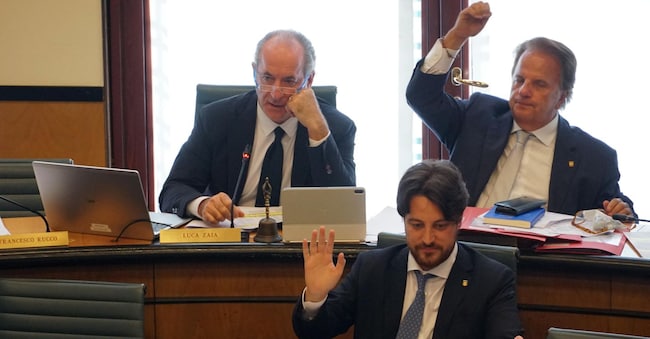
Veneto is the first region governed by the centre-right to set out the timetable and procedures for medically assisted suicide. After two days of debate, the Regional Council approved the citizens’ initiative bill ‘Liberi subito’ (‘Freedom Now’), which had previously been examined and rejected in January 2024 by a single vote. More than two and a half years later, the bill – which arose from a campaign by the Luca Coscioni association, involving the collection of 9,000 signatures – was passed with 32 votes in favour, 4 abstentions and 14 against. The amendments tabled and approved prior to the final vote proved decisive; ten of these were signed by the President of the Region, Alberto Stefani, who ‘softened’ certain passages in the Coscioni Association’s citizens’ initiative bill that had been deemed unlawful by the Constitutional Court.
Thus, in the new Veneto regional law passed by the Regional Council, the palliative care specialist (a role that reassures the more conservative elements on both sides of the political spectrum) plays a central role; a regional bioethics committee is established to provide guidance to the committees of the individual local health authorities; medical and healthcare staff participate in the committees on a voluntary basis; and the medication is self-administered by the patient requesting it, not by medical staff, who nevertheless supervise the process.
The amendments
“In the Regional Council, we have approved the amendments I tabled to the ‘Liberi subito’ bill, rewriting the text in line with the principle of ‘favor vitae’ and in accordance with the framework set out by the Constitutional Court. Our aim is clear: to protect human dignity and guarantee all Venetians full access to palliative care, ensuring that every decision is preceded by serious, competent and informed assessments,” wrote the Governor of Veneto, Alberto Stefani, on social media, adding: “This is why we have provided for: a stronger role for the palliative care specialist on the committee tasked with assessing requests for medically assisted suicide; a Regional Bioethics Committee to provide guidance to local committees; the protection of the autonomy of the attending doctor’. The approved text also stipulates that the patient must be informed in advance of the possibility of accessing palliative care and of the possibility of requesting psychological support from the Pro Vita associations (added at the last minute), which oppose a law on a dignified end of life – that is, precisely what the patient is requesting. They are not obliged to do so: they may.
The background
The new Veneto law naturally retains – and this is the necessary prerequisite – the scope of what was established by the Constitutional Court in a 2019 ruling: the national requirements for obtaining approval for medically assisted suicide remain in place; consequently, access is granted to people suffering from irreversible conditions, who are dependent on life-sustaining medical treatment, who are experiencing physical or psychological suffering deemed intolerable, and who are fully capable of understanding and exercising their free will, and therefore of making informed and free decisions regarding their own body. Only the patient may request end-of-life care.
The stages
The patient therefore continues to apply to the Local Health Authority (ULSS) in their place of residence for access to medically assisted suicide. The assessment of the requirements (as set out in the judgement) is the responsibility of multidisciplinary medical committees, one for each health authority, to be established within thirty days of the law coming into force. Their members are appointed by the ULSS on a voluntary basis from amongst its staff. The Veneto law stipulates that each committee must comprise a doctor, a neurologist, a psychologist, a psychiatrist, a forensic pathologist, a nurse, a palliative care specialist and a bioethicist. The palliative care specialist plays a central role: their opinion is not binding within the multidisciplinary committee, but it is ‘reinforced’. This means that if the committee reaches a collective decision contrary to theirs, it must provide a detailed justification in order to proceed. From the local health authority (USL) committee, the decision is passed to the ethics committee, which assesses the patient’s choice and issues a final opinion. The Veneto region also includes a regional bioethics committee, appointed by the regional executive, which will issue guidelines and a non-binding opinion to be presented to the ethics committee.

