
Vinitaly, sparkling and white wines drive sales in supermarkets
In the face of an overall drop in wine purchases of 1.3% as measured by Circana, sparkling wines (also used in cocktails) had a 4.2% increase in quantity purchases

3' min read
3' min read
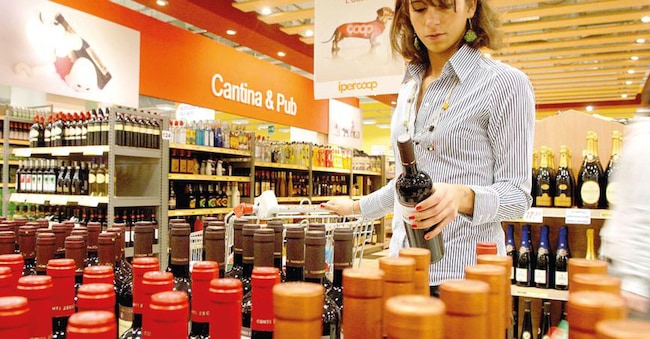
Bubbles are flying. And not only in glasses but also in modern distribution outlets. In 2024, in a difficult market context, with wine purchases dropping by 1.3% in 12 months (but + 2.2% in value), sparkling wines achieved an increase of 4.2% in volume and 3.6% in value, reveals the annual study conducted by Circana for Vinitaly. And so, compared to 2019, the quantities of bubbles bought by Italians rose by an impressive 24% while those of wines fell by 4.6%.
Certainly the distances between wines and sparkling wines remain abysmal: with the former the large-scale distribution channels take in 2.3 billion euros, with the latter 736 million euros. But the resilience shown by the latter, and their ability to overcome the spending cuts dictated by the need to cope with the higher cost of living, confirm the role that sparkling wines have assumed in the habits of Italians. This is testified to by the success of Prosecco. And not only because, with almost 50 million litres and over 362 million euros, it was by far the most purchased wine in large-scale distribution in 2024, but also because in one year it managed to increase the quantities sold by +4.7%, pulling the wool over the eyes of the entire world of bubbles.
"Sparkling wines, in all their declinations, are less affected by the contraction in wine consumption, which is more marked for still wines," confirms Daniele Colombo, wine and spirit category manager at Esselunga, which is making its debut this year at Vinitaly and the City with an Esselunga Wine Truck Enoteca. Just over a year after the launch of this e-commerce channel, developed with a view to service and multichannel, the assortment has tripled (around 2,000 Italian labels supplied by 330 wineries) and feedback has exceeded expectations.
"Consumption is moving towards less demanding drinks in terms of alcoholic strength and towards Martinotti method sparkling wines, which also lend themselves well to the preparation of cocktails,' says Marco Usai , wine specialist at MD, the Italian discount store brand, which continues to expand its own-brand Enotrium line, dedicated to single-varietal wines made from indigenous or old-growth vines, and which is working to launch the first dealcolato sparkling wine produced entirely in Italy in 2026.
The "no alcohol" segment is the latest innovation introduced by retailers to keep pace with evolving consumer demands and find the most effective strategies to counter declining demand. Its central role in wine purchases makes large-scale distribution the litmus test of changes in preferences and purchasing choices. In general, Italians continue to prefer rosés, whites and reds in that order and put still wines before sparkling ones. The best performers in 2024 were still whites and rosés, and purchases of wines with denomination of origin also grew slightly (+0.4%), although the two undisputed protagonists, Chianti and Lambrusco, lost 2.9% and 4% of volume respectively.

