
The investigation into the BMJ

Violence is the new normal in A&E departments. Even in Britain

Three out of four staff members in A&E departments across the UK are assaulted or witness incidents of violence almost every day

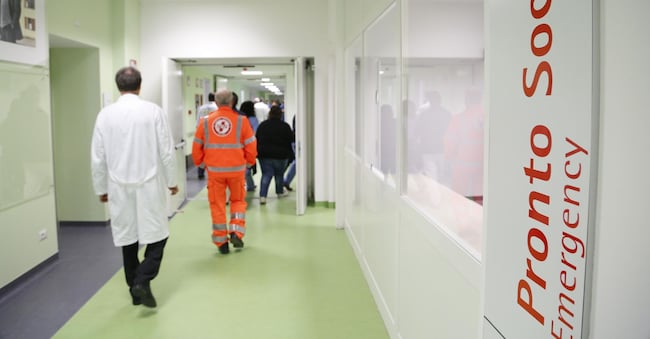
INAUGURAZIONE PRONTO SOCCORSO FONDAZIONE CA' GRANDA POLICLINICO MEDICI INFERMIERI OSPEDALE IMAGOECONOMICA

4' min read

Translated by AI
Versione italiana

4' min read

Translated by AI
Versione italiana

In Britain, A&E doctors and nurses are speaking out about how violence and aggression have now become a regular part of their daily lives. This is revealed in a survey recently published in the British Medical Journal. The main cause is said to be patients’ frustration at long waiting times and overcrowded waiting rooms. But violence can never be justified.

Imagine being pregnant, at work, and being kicked in the face by a patient lying on a stretcher. This is exactly what happened to an emergency medicine specialist in the UK, and her account is just one of many gathered in a survey that paints a picture of a situation that is barely tolerable: three in four staff members in UK A&E departments are assaulted or witness incidents of violence almost every day.

Loading...

The study published in the British Medical Journal

The alarm has been raised by the Royal College of Emergency Medicine (RCEM), which conducted a survey of over 2,100 UK A&E professionals between April and May 2026. The figures that emerge are staggering: 96 per cent of those surveyed said they had experienced violence or aggression from a patient or a member of the public. Only 4 per cent of staff still feel safe at work, whilst 27 per cent feel safe only some of the time. And it is not just a matter of physical assaults: 63 per cent of staff reported incidents of discriminatory abuse, including racism, sexism and homophobia.

Behind these figures lie the conditions under which staff are forced to work. Endless waits at triage, overcrowded wards and patients being treated in the corridors are exacerbating an already existing problem, explains the RCEM: waiting lists are fuelling patients’ frustration, reducing privacy and putting staff under pressure, creating the ideal conditions for incidents of violence to multiply. The latest figures from the UK’s NHS speak for themselves: in July 2026, nearly 47,000 patients waited over 12 hours for emergency admission, whilst on average 2,300 people a day received care in hospital corridors (‘corridor care’). An investigation by the BMJ revealed that eight out of ten hospitals in the UK are treating patients in corridors or other unsuitable spaces, and the British press has reported extreme cases, such as that of a woman with suspected meningitis who was left in a corridor for 19 hours, with her drip resting against an anatomical model (the sort used for anatomy lessons with medical students), which was being used as a makeshift support.

The impact on healthcare staff

The impact on staff wellbeing is severe: three-quarters of healthcare workers report short-term stress and anxiety following an incident of violence, 14 per cent have had to take sick leave, and more than one in four respondents (28 per cent) have seriously considered leaving emergency medicine. But this is just the tip of the iceberg: 30 per cent of staff do not report incidents of violence they have experienced, and 57 per cent do not believe their hospital would take concrete action in response to a report.

In light of these figures, the RCEM has launched the ‘Safe to Care’ campaign, calling on UK governments to take immediate action to reduce waiting times, end treatment in corridors, improve safety and provide genuine support for staff who put their own lives at risk every day. RCEM President Ian Higginson does not mince his words: no one should go to work fearing – or worse, expecting – to be assaulted, intimidated or insulted, yet this is the daily reality for the majority of his colleagues. The UK Department of Health has issued a clear condemnation of all forms of violence against NHS staff, alongside a reference to new national standards, introduced in July, which require employers within the health service to implement concrete measures to prevent and reduce such incidents.

In Italia, too, the same scenario is playing out

When Athens weeps, Sparta does not laugh. One need only glance at the Italian figures to realise that our situation is far from reassuring. According to the Annual Report of the Ministry of Health’s National Observatory on the Safety of Healthcare and Social Care Professionals, in 2025, there were almost 18,000 recorded assaults on healthcare and social care workers in Italia, affecting over 23,000 professionals (a single assault may, in fact, involve several people at the same time). In Italia, too, verbal assaults are the most common (in 69 per cent of cases), followed by physical assaults (25 per cent) and assaults on property (6 per cent). The groups most affected are nurses, who alone account for over half of the incidents, followed by doctors and social care workers, whilst women are the most frequent victims, accounting for over 60 per cent of reports in most regions.

As in the United Kingdom, the majority of incidents of violence here also occur in hospitals – particularly in A&E departments – as well as in psychiatric assessment and treatment units and on inpatient wards. Overcrowding, long waiting times, and poor and inadequate communication with patients’ families also emerge as triggering factors in Italian analyses. Meanwhile, Law 171/2024 has strengthened criminal law provisions, including the possibility of arrest in the act (or at a later date) for assaults documented by video footage and written evidence. There are some tentative signs of improvement, such as in Lombardy, where in 2025 reports of assaults fell by around 16 per cent compared with the previous year, thanks to the strengthening of rapid-alert systems linked to the police, but the news continues to report serious incidents almost every week, from hospitals in Veneto to those in Puglia.

One aspect that the UK and Italia have in common is the widespread feeling amongst healthcare workers that violence is now regarded as almost ‘normal’ – part of their day-to-day work – and that the system is struggling to provide them with genuine protection. For this reason, both across the Channel and here at home, the call from doctors and nurses is the same: CCTV cameras and panic buttons are not enough; we need to tackle the root causes of tension in A&E departments, starting with overcrowding, endless waiting times and the shortage of doctors and nurses, which every day put the nerves of patients and staff to the test. In short, the watchword is ‘reorganisation’. But above all, zero tolerance for violence.

Copyright reserved ©
Loading...

Brand connect

Loading...

Newsletter

Notizie e approfondimenti sugli avvenimenti politici, economici e finanziari.

Iscriviti