
Volkswagen, strikes start. The risk is a new profit warning
If the negotiations fail to find an outlet, the return to the old collective bargaining rules would weigh in at a cost of up to two billion

3' min read
Le ultime da Radiocor
Borsa: agosto magro per Milano (+0,9%), ma riscossa di oro (+12%) e bitcoin (+24%)
### Tlc: si apre nuova partita su frequenze, interessa soprattutto operatori Fwa -FOCUS
***Edison: Qatarenergy estende forza maggiore ad altri 5 carichi Gnl
3' min read
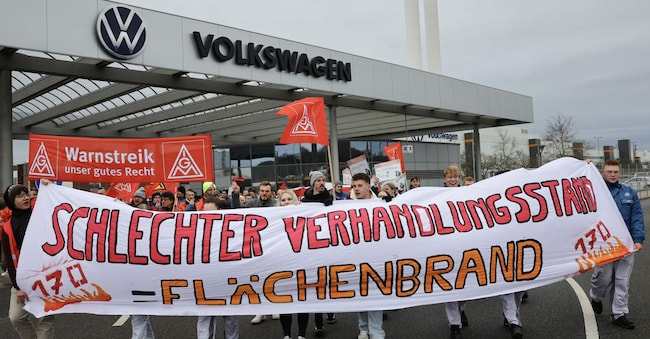
Workers at nine Volkswagen car and component production plants across Germany are set to go on strike for several hours starting today, the IG Metall union announced. The work stoppages will bring assembly lines to a halt, intensifying tensions between workers and management over the future of the carmaker's German operations.
Thousands of people are expected to gather at the Volkswagen headquarters in Wolfsburg, with further demonstrations planned at the Hanover plant, where some 14,000 people are employed, and at other sites such as Emden, Salzgitter and Brunswick.
Hypothetical indefinite unrest
These strikes could extend to 24 hours or even indefinitely if the next round of wage negotiations does not lead to an agreement. This disruption comes at a difficult time for Volkswagen, which is already facing declining deliveries and reduced profits. 'How long and how intense this confrontation should be is Volkswagen's responsibility at the negotiating table,' warned Thorsten Groeger, leader of IG Metall. Volkswagen said that while respecting workers' right to strike, the company has taken measures to maintain essential supplies to customers and limit the consequences.
The cost node
.Last week, the union proposed cost-saving measures worth EUR 1.5 billion (USD 1.6 billion), including the suspension of bonuses for 2025 and 2026, a proposal that Volkswagen rejected. Instead, the carmaker is pushing for a 10 per cent reduction in wages, arguing that cost-cutting is crucial to protect market share and profitability.
In 2023, Volkswagen allocated 15.4 per cent of global revenues to personnel costs (down from 18.2 per cent in 2020), a far higher percentage than competitors such as Bmw, Mercedes-Benz and Stellantis, which are between 9.5 per cent and 11 per cent, according to an internal works council note viewed by Reuters. In absolute terms, this is on average 51% higher. Even in terms of hourly costs, the gap is clear: in Germany, VW pays EUR 62 per hour, the highest value in the world in the automotive sector, compared to EUR 47 in France, EUR 33 in Italy and EUR 29 in Spain. The average difference to the largest EU countries is therefore over 77%.

