
Vw, the labour cost bomb: 51% higher than EU competitors
On the eve of the third round of talks the union proposes cuts of 1.5 billion. Good sales in October and Skoda Enyak overtakes Tesla Model Y

4' min read
Key points
Le ultime da Radiocor
Gas: sale del 2% a 74 euro, QatarEnergy estende forza maggiore su Lng
Borsa: Europa in cauto rialzo con focus su greggio, Milano parte a +0,1%
***BTp: spread con Bund fermo a 92 punti, rendimento al 4,54%
4' min read
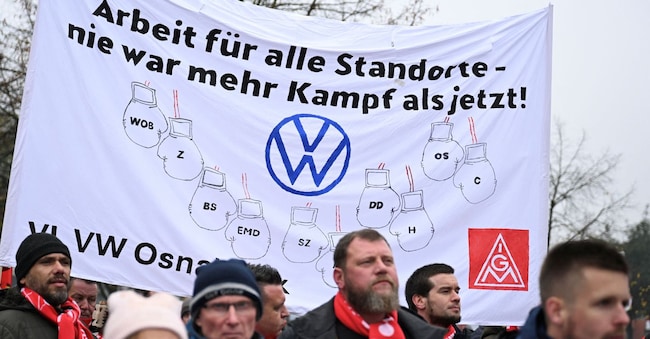
The Volkswagen Group is grappling with a bomb that is ready to explode. With a new round of negotiations starting tomorrow, the company is confronted with significantly higher labour costs than its main European competitors, a condition that puts pressure on the sustainability of its German operations. Management's goal is to cut EUR 17 billion. The hypotheses being looked at? The closure of three Vw brand plants in Germany, tens of thousands of redundancies, 10% pay cuts, a pay freeze for two years. The union offers a cut of 1.5 billion, through the suspension of part of the bonuses for workers, managers and board members and the postponement of the proposed increases (+7%), money to be paid into a fund. Works Council President Daniela Cavallo, at a press conference on Wednesday, acknowledged the need to tighten the belt, but insisted, for example, that the dreaded factory closures could be avoided on the basis of workers' proposals.
The big problem of labour costs
.In 2023, Volkswagen allocated 15.4 per cent of global revenues to personnel costs (down from 18.2 per cent in 2020), a far higher percentage than competitors such as Bmw, Mercedes-Benz and Stellantis, which are between 9.5 per cent and 11 per cent, according to an internal works council note viewed by Reuters. In absolute terms, this is on average 51% higher. Even in terms of hourly costs, the gap is clear: in Germany, Volkswagen pays EUR 62 per hour, the highest value in the world in the automotive sector, compared to EUR 47 in France, EUR 33 in Italy and EUR 29 in Spain. The average difference to the largest EU countries is therefore over 77%.
In addition, the costs of the group's German factories are 25-50% higher than the company's targets, with some facilities being twice as expensive as their competitors. Thomas Schaefer, CEO of the Volkswagen brand, said that this situation is eroding the productivity of the group, which is already under pressure from more competitive Chinese players, Byd above all, entering the European market.
The union revises the proposal
.The negotiations scheduled for Thursday are shaping up to be very tense. In the context of collective bargaining, the large metalworkers' trade union, Ig Metall, through its district manager Thorsten Gröger, and the Volkswagen works council have said they are prepared to relax their demands in order to avoid lay-offs and plant closures. As reported by the Bild newspaper, the aim is to ensure the survival of the production sites and long-term employment.
Tensions further increased after Volkswagen cancelled a separate contractual agreement regulating wages at six German plants in September, fuelling discontent. The proposed cuts are particularly ill-digested by the unions, especially after recent wage increases of 5.5% in the industry's collective agreement and 4% offered by Tesla in Germany.


