
Von der Leyen passes EU Parliament vote of no confidence
Far-right motion receives 360 votes against, 175 yes and 18 abstentions
From our correspondent Beda Romano
 Aggiungi Il Sole 24 Ore
ai preferiti su Google
2' min read
2' min read
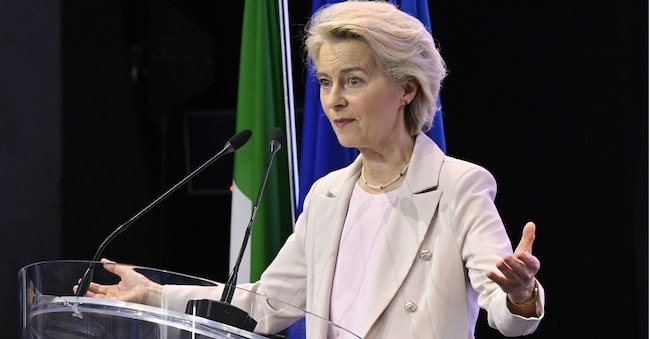
BRUSSELS - The President of the European Commission won the confidence of the European Parliament today, Thursday 10 July. A no-confidence motion, tabled by a group of nationalist MEPs, was rejected in Strasbourg with 360 no votes, 175 yes and 18 abstentions. The popular-socialist-liberal majority showed some cracks at a time when discontent and tensions are growing against the management of Ursula von der Leyen (video).
The no-confidence motion could hardly have passed. A double majority would have been needed: two thirds of the votes cast and at least 360 MPs in favour of censure. According to a very first analysis of the vote, the Populars voted against the motion, and thus in favour of Mrs von der Leyen, while some Socialists and Liberals preferred to abstain. It should be noted that only 553 MPs out of a total of 719 took part in the vote.
By comparison, in last year's vote of confidence, President von der Leyen took office with 401 votes in favour. Today there were only 360 votes in her favour, which is exactly the same as a majority. Also according to an initial analysis of the vote, MEPs from Fratelli d'Italia preferred not to take part in the vote, while Forza Italia and Partito Democratico MEPs voted against the motion, unlike the Lega and M5S who voted in favour.
"This is the moment of truth: on one side the imperialist Brussels elite, on the other the patriots and common sense. One cannot evade the issue, one has to make a choice," Hungarian Prime Minister Viktor Orbán, who is in open conflict with the Commission on several fronts, had written before the X vote. The initiators of the motion criticised Brussels' refusal to disclose messages between Ms von der Leyen and executives of vaccine manufacturer Pfizer during the Covid-19 pandemic.
In a heated debate in the chamber on Monday, Ms von der Leyen had accused the promoters of the motion of being 'extremists', 'anti-vaccine' and 'Putin admirers', and had attempted to strengthen the 'European' majority. However, the German leader did not escape criticism from the left and the centre, who blamed her overly centralist management and accused the EPP of cultivating ambiguities with the extreme right in order to better challenge environmental laws.


