

Walking and cycling: Bolzano in the lead but Italians are increasingly 'lazy'
Physical activity improves health, but in our country only 10 per cent of adults use a bicycle and 39 per cent walk for their daily commute: the latest data from the Istituto Superiore di Sanità (Italian National Institute of Health) photograph a country in which the choice of active mobility is decreasing
2' min read
2' min read
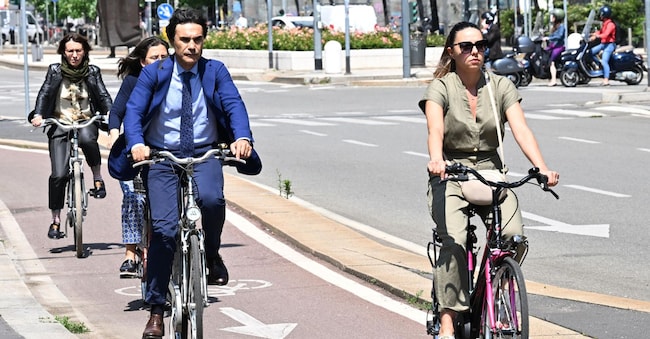
Cycling is used for daily trips by 10% of adults (18-69 years) while 39% of the sample walk. This is stated by the data, covering the two-year period 2023-2024, of the Passi surveillance coordinated by the Istituto Superiore di Sanità, according to which the choice of active mobility is decreasing in the adult population and the share of the population that, thanks to these choices, reaches the levels of physical activity recommended by the WHO is substantially stable over time, at around 19%. The data are published to coincide with the European Mobility Week of 16-22 September, which culminates with the 'Car Free Day'.
In addition to being advantageous for the environment, "active mobility offers the possibility of reaching the levels of physical activity recommended by the World Health Organisation and having health benefits," stresses Valentina Minardi, researcher at the National Centre for Disease Prevention and Health Promotion. This is why the practice should be encouraged as much as possible at all levels, from public awareness to public policy'.
Bicycle use
.The habit of using a bicycle to go to work, school or for daily journeys is more frequent among men (11%) and foreigners (15%). It is more widespread among residents in the regions of Northern Italy and less so among residents in Central and Southern Italy (15% in the North vs. 7% in the South). The highest figure is recorded in the Autonomous Province of Bolzano, where 1 in 4 people habitually use a bicycle for their daily journeys. In addition, the 2023-2024 data show that those who cycle do so for almost 4 days a week for a weekly total of more than 140 minutes.
Walking routes
.The percentage of people who commute on foot for their regular trips is higher among 18-24 year olds (47%), women (43%), people without financial difficulties or who are better educated, and foreigners (45%). As with cycling, the habit of travelling on foot is more frequent in the North than in the rest of the country, and it is once again the Bolzano P.A., followed by Piedmont, that records the highest value: almost 6 out of 10 people walk to work or to the places they frequent every day. Those who walk for their regular commute do so on average more than four days a week for a weekly total of 170 minutes. Over time, this habit slowly declines and it is young people (18-34 years old) who experience the greatest decline.

