
Waste: 140,000 truck trips for export between regions. Here is the impact on Tari
According to Utilitalia, there is still an infrastructure deficit, especially in the Centre-South. Dal Fabbro: 'An adequate number of plants is needed'

4' min read
Key points
4' min read
Italy needs 4.5 billion Euro in investments to make up for the plant deficit and thus reach the 2035 EU targets, which envisage 65% effective recycling on the total amount of urban waste collected (the country is currently travelling at around 51%) and the use of landfills for no more than 10%, while the current threshold is 6 percentage points above that level. These are the estimates formulated by Utilitalia, which has put the peninsula's plant requirements on the radar, focusing on the gap that still sees the central and southern regions lagging behind despite the improvements brought about by the funds provided by the Pnrr. The latter, it should be recalled, aims with an allocation of 2.1 billion euro to improve waste management and the circular economy, strengthening infrastructures for differentiated waste collection, modernising or developing new waste treatment plants, on the one hand, and implementing exemplary ('flagship') highly innovative projects for strategic supply chains, on the other.
Dal Fabbro: new installations thanks to Pnrr's push
"As far as organic waste is concerned,' Utilitalia president Luca Dal Fabbro explains to Il Sole 24 Ore, 'thanks in part to the impetus provided by the NRP, in recent years we have recorded the opening of new anaerobic digestion plants and many projects are being finalised. In the next three years, Utilitalia again reminds us, a further 22 treatment plants for the organic fraction should come into operation or be upgraded. A small assist to the system, certainly, but not enough to close the circle around the existing gap, which will continue to affect the central-southern regions and Sicily for a capacity of about 900 thousand tonnes, while as regards energy recovery and the national deficit, again looking at the centre-south, amounts to about 2.5 million tonnes. In short, something is moving, also thanks to Utilitalia's action, adds Dal Fabbro, "which has been constant in highlighting the need to close the cycle at a regional level to limit waste travel along the peninsula". Which remains, however, an open knot, as the numbers show.
The export of waste between regions
.In fact, the shortage and poor location of plants continues to fuel waste exports, with important repercussions in economic and environmental terms. Utilitalia calculates that about 3.15 million tonnes of waste were processed in regions other than those where it was produced. The flow travelled mainly from the Centre-South to the North. The North, in particular, imported about 1.79 million tonnes from the Centre-South areas and already, thanks to its plants, almost achieves (14.6%) the landfill target set by the EU for 2035. A target already largely surpassed in regions such as Lombardy and Emilia-Romagna which, in addition to having achieved very positive results in recycling, have adequate endowments of waste-to-energy plants). The Centre was forced to export 16% (0.97 million tonnes) of its waste production, despite being able to send an extremely high percentage, 35.4%, to landfill, but not able to guarantee all the demand. As for the South, the level of waste exported elsewhere amounts to 1.38 million tonnes, which corresponds to 23% of its waste production, but only because of the high availability of landfills, which are now used for a high percentage (39.5%).
The impact on the Tari
.In order to support the export of waste between regions, 140,000 lorry journeys were required, equal to 76 million kilometres travelled, with an additional 75 million euro burden on the Tari (the waste tax), 90% of which was borne by the central-southern regions. It is therefore necessary to build new plants, starting with waste-to-energy plants. Which, recalls Dal Fabbro, 'are essential to treat residual waste and sorting waste for recycling, recovering energy: this does not hinder separate waste collection, indeed it integrates it into a sustainable and efficient system. Even from this point of view, in the face of a significant plant deficit that has always characterised the Centre-South, there has been some progress, albeit less decisive than in the case of organic waste treatment plants: just think of the awarding of the tender for the Rome plant, or the start of the tenders for the design of the two plants planned in Sicily'.
The Rome Project
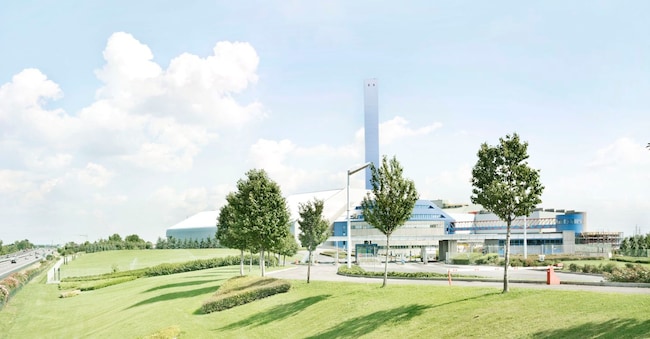
.According to Utilitalia's forecasts, the waste-to-energy plant in Rome - which will be built by a grouping of companies comprising Acea Ambiente, as group leader, with Hitachi Zosen Inova AG, Suez Italy, Vianini Lavori and RMB - will solve the management of non-recyclable waste and waste from differentiated waste collection in the Rome capital area, bringing Lazio closer to self-sufficiency in the management of non-recyclable waste and halving the energy recovery plant requirements of central Italy: The federation estimates that 24 thousand fewer lorry trips will be made to transport waste to plants in the north and abroad, saving 8 thousand tonnes of CO2 equivalent and meeting the energy needs of 200 thousand households.


