In Parliament

Waste, the Ecomafie commission opens an enquiry on the waste-to-energy plant in Rome. "But new plants are needed"

Also in the crosshairs is Gualtieri's use of special powers as Jubilee commissioner. The general j'accuse: on the management of rubbish in the capital all the different administrations have failed

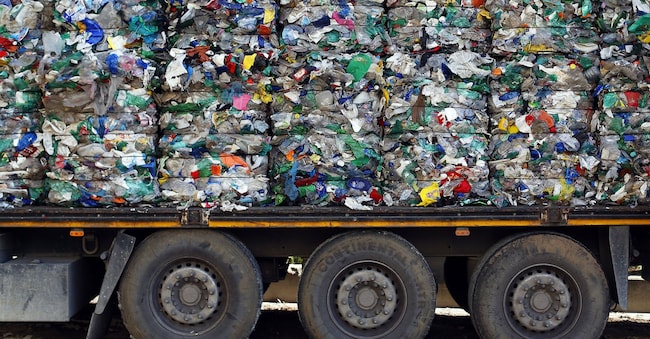
A truck loaded with waste is seen at the Malagrotta landfill near Rome, December 11, 2013

7' min read

7' min read

On the one hand, there is the 408-page dossier containing the final report of the parliamentary commission of enquiry into the Ecomafie situation in Roma Capitale and Malagrotta: fifty years of the history of the city's failed rubbish management, from the opening of the landfill to its closure in 2013, defined as 'dutiful', up to the present day, summarising costs, disputes, plant plan mishaps, and Ama's role. On the other hand, there is the announcement by the Leghist president Jacopo Morrone: the commission will now turn a spotlight only on waste-to-energy plants and in particular on the new Roman plant to be built in the Santa Palomba area, which is waiting for the final award to Acea Ambiente, the leader of a temporary consortium that also includes Kanadevia Inova (former Hitachi Zosen), Vianini Lavori, Suez Italy and Rmb.

Gualtieri's special powers are also under scrutiny

"Specifically, I will not conceal it, press reports have emerged that tell us that there are various problems regarding the focus on Santa Palomba," Morrone stressed, adding that "a necessary in-depth investigation was not possible in a timely manner because the top management of Ama falsely declared that they were not in possession of the necessary documentation," as reported by the Rome public prosecutor's office. While giving the mayor Roberto Gualtieri credit for handing over the technical documents at the end of last November, it is also on the special powers granted to him as extraordinary commissioner for the Jubilee that the commission questions itself. "It is important to understand whether they are necessary knowing that the waste-to-energy plant will not be operational before the summer of 2027," Morrone explained.

Loading...

The waste-to-energy plant 'promoted' by the Vas procedure

In any case, however, the report illustrated together with Fdi senator Andrea De Priamo and Dem deputy Marco Simiani, minority rapporteur, recalls how the Vas procedure confirmed that "in the reality of the Municipality of Rome the construction and operation of a high-efficiency energy recovery plant from undifferentiated waste results in a significant reduction of the environmental impact compared to the alternative management solution consisting of maintaining the treatment of residual undifferentiated waste only by means of pre-treatment with Tmb/Tm (zero scenario) and complies with the Dnsh criteria" on not causing significant damage to the environment".

Termovalorizzatore di Roma, Gualtieri: "Sarà l'impianto green più avanzato al mondo"

The 'administrative legitimacy' of the plant has been established so far

.

The text also recalls the decisions by which the Regional Administrative Court of Lazio rejected the four appeals with which the authorising measures were challenged on the merits. The grounds of appeal were also all found to be unfounded. The committee's report states: "To date, and in particular from the date of the Council of State ruling no. 1349 of 9 February 2024, the political-administrative choice of the waste-to-energy plant has received a definitive affirmation of administrative legitimacy", based on various arguments: the just limitation of waste disposal in landfills, "the compliance with the Community principle of self-sufficiency and territorial proximity in waste disposal", the "lower environmental impact related to waste transport activities" and the precautionary principle. The parliamentarians, however, also write that 'the attention of citizens with respect to the construction of the plant remains very high, especially for the possible environmental and health effects'. And indeed, the No-Tmv committees applaud: 'The opening of an investigation is excellent news.

Malagrotta 'huge crater' symbol of mismanagement

The situation in which Rome finds itself today is the result of a disastrous past: 'The various administrations that have succeeded one another over the years in the area have not been able to deal effectively with the waste cycle policy'. "Malagrotta," the MPs write, "represents the symbol of the mismanagement of the waste cycle in the capital, a sort of huge crater managed by a private actor that for decades has ensured that Rome's real waste problem has not been tackled with a publicistic perspective also aimed at sustainability, both environmental and economic, and aimed at rationalising the costs of the public service. In the wake of the emergency, the consolidated practice 'saw the widespread dynamic of contracts awarded by direct negotiation to Cerroni group companies, with methods often reviewed by the competent judiciary and with a degree of opacity in the keeping of accounting records that was also highlighted by the judicial administrator, Luigi Palumbo, in various judicial and institutional venues'.

For years, four Tmbs processed over 900 thousand tonnes per year

.

After the closure of the landfill - which is now being upgraded to ensure the watertight-capping, the biogas capture and leachate treatment plant and the external containment belt (the commission proposes 'a periodic epidemiological survey' to fully understand the effects on residents' health) - for years the collection vehicles dumped waste in the four Tmbs then in operation at Rocca Cencia, Salario and Malagrotta, before sending the matrixes to the waste-to-energy plant at San Vittore and other regions or to landfills. The four Tmbs guaranteed a capacity of over 900,000 tonnes per year, ensuring self-sufficiency in the primary treatment of residual municipal waste.

From 2018 the drastic reduction in plant capacity

.

But since 2018, this plant endowment has progressively thinned: the Tmb Salario closed after a fire that occurred in July 2018; the one at Rocca Cencia, like Salario owned by Ama, suffered two years after a judicial seizure that imposed a 40% reduction in the authorised treatment potential, from 234 thousand to 140,400 tonnes per year; the Malagrotta plants owned by the company E. Giovi closed, again due to fires, in June 2022 and December 2023. The result? 'A drastic reduction of the plant capacity in the territory of Roma Capitale'.

Sorted waste collection towards 47% in 2024, target 70% by 2035

Meanwhile, from 2010 to 2022, total waste production in the city decreased by 12.8 per cent, while separate waste collection increased by about 345,000 tonnes, with the percentage, calculated as a percentage of total waste production, rising from 21.1 per cent in 2010 to 45.9 per cent in 2022. In 2023 the waste produced and collected in Rome was just under 1.6 million tonnes. The estimate for 2024, based on the projection of preliminary data from the first quarter, would foresee an increase of 0.8%, to just under 1.61 million tonnes. Separate waste collection increases further, from 46.7 per cent in 2023 to 47.5 per cent in the first quarter of this year.

Where Roman waste goes

.

The report tries to reconstruct the geography of Roman waste. Organic waste from separate waste collection was mainly handled in plants outside the region: out of 204 thousand tonnes sent to aerobic or anaerobic biological treatment plants by the municipality, 82.1% was treated outside the region (mainly Friuli-Venezia Giulia and Veneto) and only 17.9% in Lazio. As regards undifferentiated waste, the San Vittore incinerator handled more than 289,000 tonnes of municipal waste or waste derived from the pre-treatment of municipal waste, of which an estimated 149,000 tonnes came from mechanical biological treatment plants or from operators serving the municipality of Rome.

Out of region 101 thousand tonnes, abroad almost 38 thousand

More than 101 thousand tonnes of Roman rubbish, treated by the Lazio Tmb, were instead sent to incineration plants located outside the region, mainly in Lombardy (78,802 tonnes) and Emilia Romagna (19,410 tonnes). Waste coming from the Lazio region and disposed in extra-regional landfills, mainly produced in Rome, is quantified at about 82 thousand tonnes in 2022, while the amount of pre-treated municipal waste exported outside the national territory and sent to foreign incineration plants amounts to almost 38 thousand tonnes, 85% of which is destined for the Netherlands and the remaining 15% to Germany.

An extra hundred euro expenditure per inhabitant per year

.

The burdens of the inability to close the waste cycle are high: if we consider that the average national per capita annual cost of urban waste management is 194.5 euro per inhabitant (2021 figure, in 2020 it was 185.6), an increase of 8.9 euro, and that in Rome this value is 296.2 euro per inhabitant (2021 figure, +8 euro/inhabitant compared to 2020), the expenditure in the capital is about one hundred euro more per inhabitant per year. Added to this is the fact that spending on undifferentiated waste is four times higher than on differentiated waste. Reducing undifferentiated waste is also an economic necessity.

Jubilee alert: waste to Amsterdam could cost 37.5 million

An alert has been sounded on the costs that will burden the accounts for the Jubilee: for Morrone, the risk is that Rome could end up spending between 700 and 800,000 euro per week to take the waste to the Dutch incinerator in Amsterdam for disposal. At the moment, 'two trains a week leave Civitavecchia for the Netherlands at a cost, we are told, of about 200 euro per tonne: if you multiply that by 900 tonnes per train and calculate that every week, two trains leave Civitavecchia and arrive in Amsterdam, it should cost 360 thousand euro a week'. In the Jubilee year the trains should double, "so 720 thousand euros per week for a total cost that, if calculated over 52 weeks of the Jubilee year, is around 37.5 million. I hope there will be a discount because the figure is significant'.

The guidelines of the waste plan

.

The diagnosis is merciless: 'The plants in the area are completely inadequate to close the waste cycle'. Gualtieri's waste plan aims to remedy this situation of distress. It has moved the 70% separate waste collection target to 2035, envisaging 30 collection centres throughout the capital's territory, and envisages a new plant consisting of two Ama plants for the selection and valorisation of dry fractions (paper, plastic, cans) of 100,000 tonnes per year each, at Rocca Cencia and Ponte Malnome; the replacement of the previous projects for two Ama aerobic composting plants (in 2018), with two biodigesters of 100,000 tons per year each, at Casal Selce and Cesano, for the treatment of organic waste; the new waste-to-energy plant in the Santa Palomba area of 600,000 tons per year for undifferentiated waste. A total investment of 1.3 billion - about one billion for the incinerator and 329 million for the other plants - which, despite the doubts and the desire to investigate the waste-to-energy plant in greater depth, seems to emerge as indispensable, considering also the weakening of Ama's treatment capacity. In obvious difficulty: after five years in the black, the Rome-based waste company with over 7,000 employees closed its 2023 budget with a loss of EUR 46.5 million.

Copyright reserved ©
Loading...

Brand connect

Loading...

Newsletter

Notizie e approfondimenti sugli avvenimenti politici, economici e finanziari.

Iscriviti