EU

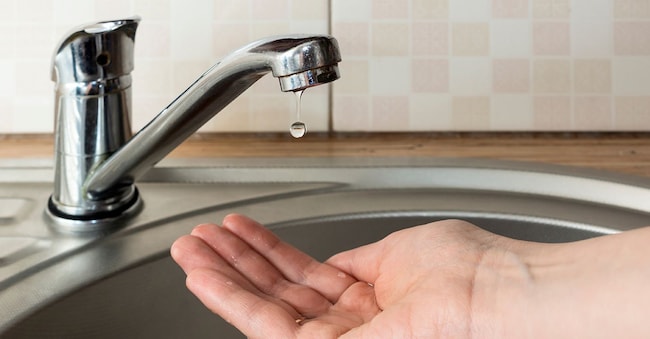
Water crisis, 30% of Europeans facing water scarcity

The European Commission's new water resilience strategy kicked off in early June

by Davide Madeddu (Il Sole 24 Ore) and Ana Somavilla (El Confidencial, Spain)

(Adobe Stock)

4' min read

4' min read

Water, a vital and increasingly scarce resource even in EU countries, is at the centre of a new political awareness. The European Commission launched a strategy for water resilience at the beginning of June, with the aim of tackling a now structural problem: the increasing water scarcity. A necessary response to a crisis that can no longer be considered episodic, but requires coordinated interventions, targeted investments and a paradigm shift in water management.

According to data compiled by the Commission, 30% of Europeans, on average, suffer the consequences of water scarcity. This number has doubled in the last 10 years, which translated means: "23 million people do not have access to safe drinking water and with increasing global demand, the EU no longer takes this common good for granted".

Loading...
Loading...

Investment needs to be increased

Precisely to address this situation, the EU has decided to increase investment in sustainable water management with a focus on proper resource management. Correct behaviour could save "up to EUR 2.8 billion a year and create 9 thousand jobs".

Because it is not only climate change and rising temperatures and droughts that are at the root of this situation, but also other factors that could be controlled and governed, such as water use and wastage. In this context, cohesion policy funding supports five main categories of water-related investments ranging from wastewater collection and treatment to water management and conservation, continuing with drinking water supply, the construction and use of energy-efficient infrastructure, improved rainwater monitoring and management, and flood and drought risk management

"The largest share goes to wastewater infrastructure, a key component in tackling pollution and protecting public health," reads the EU document. The Water Resilience Strategy consolidates cohesion policy priorities and investments by aligning them with key environmental objectives: sustainable water management, climate adaptation and biodiversity protection. Through targeted and measurable actions, the strategy advances these priorities across the EU'.

The Italian case

.

Drought is also being felt in Italy, where the entire country records 3 different levels of crisis on a scale of 4. The Ispra study, which carries out constant monitoring, indicates Sicily as the region with high severity. Then there are other regions with medium severity: the Sardinia district, the southern Apennine district, where there are different situations depending on the area of use, and the central Apennine district. The Po River district, the Northern Apennine district and the Eastern Alps district are in a normal condition.

The Cima Foundation Studies

At the beginning of June, researchers from the Cima Foundation (a non-profit research centre of national importance that promotes study, scientific research, technological development and advanced training in engineering and environmental sciences) carried out a series of surveys in the mountains on patches of snow scattered over ridges and high altitude basins. They study what is known as the hidden strategic reserve on which rivers, lakes, crops and life depend.

Because, in the words of Francesco Avanzi, researcher at the Cima Foundation, "snow is the first brick in the Alpine water balance. If we make a mistake in assessing its quantity or characteristics, we miss the opportunity to anticipate droughts, manage floods, and more generally prepare effective responses, from reservoir management to forecasting river flows'. Hence the need to pursue meetings aimed at comparing and studying the phenomena in order to safeguard and protect the water resource.

The Spanish case: rising reserves, but alert remains high

If in Italy drought remains a concrete concern, in Spain the situation is one of light and shade. According to data released by the Ministry for Ecological Transition and Demographic Challenge, Spain's water reserves stand at 75.7 per cent of their total capacity. Reservoirs currently store 42,410 cubic hectometres of water, a drop of 429 hm³ (-0.8%) in the last week alone. However, the particularly wet spring had a significant impact, especially on the Atlantic side, with heavy rainfall also on the Mediterranean side: 76.7 mm of precipitation was recorded in San Sebastián - Donostia.

The comparison with the average of the last ten years for the same period is significant: in the past, reserves stood at 61%, or 34,700 hm³. Today, therefore, levels are a good 14 percentage points higher. The AEMET (State Meteorological Agency) thus certifies the end of the long drought that began at the end of 2022. But the authorities warn: this favourable situation does not guarantee no restrictions for the rest of the year. Even in the past, despite good initial levels, areas such as southern Spain have faced cuts in domestic water use or the closure of public showers on the beach.

The institutional response is based on Special Drought Plans, fundamental tools for managing water scarcity and mitigating the effects of the crisis, especially in vulnerable regions such as Andalusia and Catalonia. These plans, approved in 2018 and updated with the new hydrological plan cycles, distinguish between natural drought events and water shortage situations related to increasing demand.

In 2024, regions such as Andalusia and Catalonia activated emergency measures: cuts in night pressure in Seville and Málaga, bans on washing cars except with recirculation systems, and restrictions on filling swimming pools in hotels and campsites. At the same time, the government has introduced a plan to support agriculture, with EUR 713 million in direct aid, supplemented by more than EUR 5 billion allocated through PERTE (Strategic Plan for the Digitisation of the Water Cycle) and for the modernisation of irrigation systems, with the aim of reducing losses and waste.

*This article is part of the European collaborative journalism project "Pulse".

Copyright reserved ©
Loading...

Brand connect

Loading...

Newsletter

Notizie e approfondimenti sugli avvenimenti politici, economici e finanziari.

Iscriviti