

Webuild strengthens its presence in the Gulf: the Zuluf plant for Saudi Aramco is now operational
The groundwater treatment project carried out by Fisia Italimpianti is now underway. The achievement of the “First Water” milestone marks the transition from the construction phase to the operational phase, ahead of the start of commercial operations in the coming months

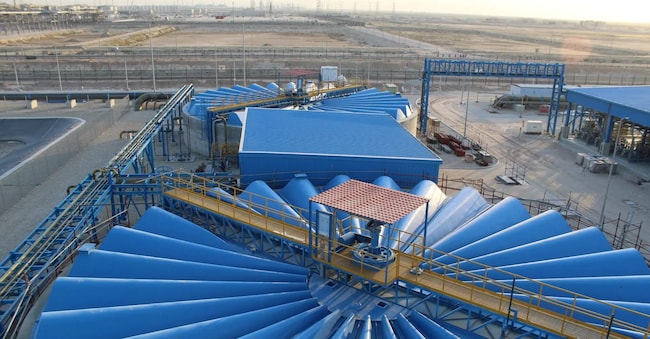
Webuild is consolidating its position in the energy and infrastructure services sector in the Middle East with the operational launch of the groundwater treatment plant in Zuluf, in eastern Saudi Arabia, built by Fisia Italimpianti on behalf of Saudi Aramco; the achievement of ‘First Water’ marks the transition from the construction phase to the operational phase, ahead of the start of commercial operations in the coming months. The plant is designed to treat groundwater with high salinity and containing minerals, gases and hydrocarbons, making it suitable for reinjection into offshore wells — a process essential for maintaining reservoir pressure and crude oil production in the Arabian Gulf — and will have a maximum capacity of 185,000 cubic metres per day; Fisia will be responsible for operational management and maintenance for the next 25 years. The commissioning of the Zuluf plant forms part of the Group’s multi-year strategy aimed at diversifying its portfolio towards long-term services and high-tech contracts in the Gulf region, where Fisia Italimpianti is recognised as a specialist in water treatment and desalination. In the United Arab Emirates and Qatar, the Group has already delivered large-scale water and infrastructure projects, including desalination plants such as Jebel Ali M and civil engineering and transport projects, which have helped to consolidate stable relationships with local clients.
Integration
Zuluf’s operations highlight the progressive integration of construction activities with long-term management and maintenance contracts, a model that reduces exposure to construction cycles and capitalises on the expertise of industrial subsidiaries such as Fisia Italimpianti. The combination of major civil engineering projects (underground railways, dams, urban infrastructure) and industrial assets (water treatment plants and power stations) enables the group to position itself as a one-stop supplier for public clients and major private developers in the region, in line with local demand for turnkey projects and long-term partnerships.
Geopolitical implications
Expansion into Saudi Arabia and the UAE strengthens the industrial ties between Italian companies and the investment plans of the Gulf monarchies, where funding for economic diversification (Vision 2030 and UAE programmes) is keeping demand high for complex infrastructure and water technologies; this offers Webuild opportunities across a range of sectors, from urban transport to environmental and energy services. However, the challenge of country risk and reputational risk remains: participating in projects such as NEOM entails exposure to political and governance issues that large international companies are carefully assessing, whilst balancing commercial opportunities with corporate responsibility.
Recent contracts
Saudi Arabia — Neom / Trojena: Webuild has secured significant contracts for Neom, including the mega-deal worth $4.7 billion for the Trojena complex and the dams linked to the artificial lake, as well as contracts for high-speed railway lines and civil engineering works related to the futuristic NEOM project.
Saudi Arabia — Metro and transport in Riyadh: in 2026, Webuild led a consortium to extend the Red Line of the Riyadh Metro under a contract worth a total of approximately 2.75 billion dollars, thereby strengthening its presence in the country’s urban rail sector.

