

West Nile, virologist Parrella: 'Situation under control but no cure, the most fragile must be protected'
Simit president: 'In 80% of cases, the disease is asymptomatic and only worsens in 1% of patients: primary prevention is the first and most effective line of defence'

4' min read
4' min read
The West Nile virus has returned to Italy and is doing so in a similar way to past years. The recent deaths - seven have been officially notified in recent weeks, in Lazio, Campania and Piedmont - bring to the attention of public opinion an infectious disease that is sometimes overlooked but far from marginal in terms of public health.
For Roberto Parrella, president of the Italian Society of Infectious and Tropical Diseases (SIMIT) and director of the Infectious Diseases Unit of the Cotugno Hospital in Naples, which is monitoring some patients infected with the virus, the growing spread of West Nile in Italy 'must not generate alarmism, but requires responsibility and awareness'. "It is no longer time to consider these infections exotic or rare," he explains, "and the challenge of arboviruses, amplified by climate change and the migratory movements of birds and insects, must be tackled with modern tools and a multidisciplinary approach.
The infections are spreading like wildfire. What is causing the virus to spread?
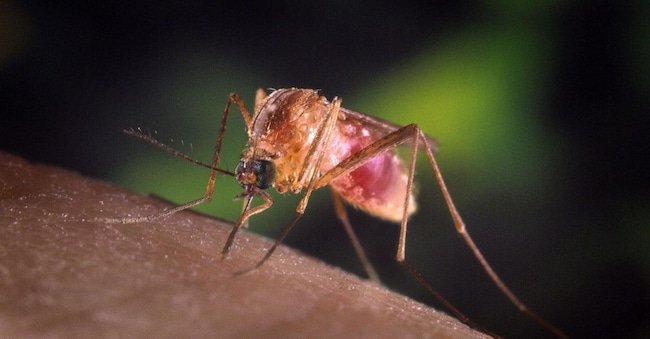
The virus is transmitted by the common mosquito of the genus Culex pipiens, which is now widespread in our territory and is favoured by climate change, which contributes to extending the vector's season of activity and increasing its density. The disease caused by the West Nile virus - the so-called West Nile Disease - mostly strikes asymptomatically (about 80% of cases), but in a significant proportion of patients it can manifest itself with flu-like symptoms, and in less than 1% of cases it can evolve into severe neuroinvasive forms, with encephalitis, paralysis and sometimes fatal outcomes, especially in elderly and frail individuals.
Citizens' concern is also growing. Is there alarm among experts?

