Successions

When leadership rhymes with stability and continuity: the 'lesson' of the Papacy

Managing succession as a cultural and strategic process to ensure continuity and innovation in leadership change

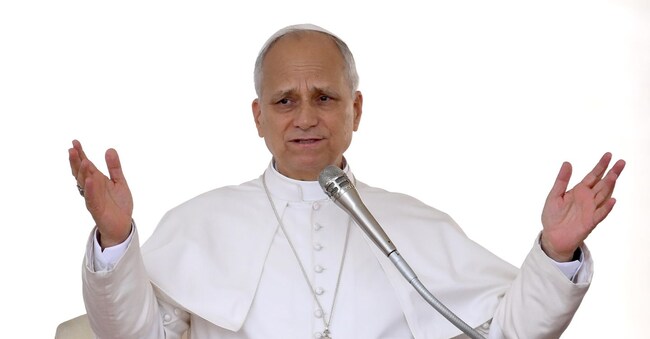
Papa Leone XIV guida l'udienza generale settimanale in Piazza San Pietro, Città del Vaticano, 17 settembre 2025.     ANSA/ETTORE FERRARI (papa, Leone, Vaticano, udienza generale)

5' min read

Translated by AI
Versione italiana

5' min read

Translated by AI
Versione italiana

Is stability a strategic value? And how does this corporate virtue, which should be an integral part of leaders' thinking, relate to the Papacy's style of succession? Questions that are probably not ritual in the common dialectic of those who deal with management and business strategy but which remain valid even several months after the election of Pope Leo XIV, the American Robert Francis Prevost, who recently celebrated his 70th birthday. And who, from the height of his role as bishop of Rome and sovereign of the Vatican City State, is a leader. And how.

But it is not so much with respect to the figure of the pope that the theme of 'stability' should be analysed and interpreted, but rather with respect to one of the peculiarities of the Catholic Church, namely that of being an institution with over two thousand years of history and traditions behind it, handed down to this day also thanks to its ability to manage changes in leadership with rigour and method. Clear procedures, rules of communication and a shared (as well as official) vacancy of power (no pope is elected without a two-thirds majority and this has been a rule in force since 1179) have allowed it to remain stable even in the absence of a leader and to guarantee the necessary institutional clarity. The 'secret' of this stability, according to the experts at Hogan Assessments, who have studied this aspect of its establishment from a management perspective, lies precisely in a system that ritualises and reduces the risks of transitions from one pope (and thus from one leader) to another and elects the components of structure and consensus as fundamental resources of the process.

Loading...

Leadership succession, in the Vatican's logic, can thus be both a symbol of continuity and renewal, and such qualities can make a CEO's fortune and a company's success. It is a pity that, according to PwC's Ceo Survey 2023, 73% of top corporate executives globally say they are concerned about business continuity during leadership transitions and that, according to other more recent studies, only 30% of companies have a succession plan that goes beyond a simple emergency solution, while only 46% of board members believe that the selection processes (for the new leader) are truly rigorous.


Federico Frattini, Dean of Polimi Graduate School of Management, offers an interesting reading of the papacy's style of succession by identifying the 'lessons' that managers can learn from it. "Of all the aspects that characterise Vatican history," he explained to Sole24ore.com, "the change of leadership is the most topical and closest to the corporate world. It is a phenomenon that is accompanied by significant complexity or a drastic drop in performance. Think of the change of hands in family businesses, when the outgoing founder and owner usually creates an impasse: managing three generational transitions is an undertaking and only one in ten manages to do it optimally'.

Problems related to succession are not lacking even in large companies, where the transition from one leader to another often brings with it turmoil when it comes to settling down. "In the case of a transformational leader and of profound discontinuity," Frattini points out in this regard, "there is a possible state of crisis, and there are several studies that confirm that, when this hypothesis arises, the problem is very likely to occur: the new leader wants to cling completely to the predecessor's model, marked by novelty, but the application of the same recipe does not work or it wants to stand out too much and strays too far from the legacy of its predecessor, failing.

 How to deal with these situations? To answer this precise question, the Dean of Polimi GSoM points out two lines of conduct that allow the transition to be managed without jolts: reinterpreting the legacy of the past but in an innovative key and remaining anchored to pre-existing pivotal elements but adapting them to the changing context; guaranteeing the continuity of the C-suite that will govern the organisation in the new mandate..

Often, observes Frattini, 'succession is conceived as an event, whereas in reality it is a process that has to be codified, which starts much earlier in time. A fundamental step in leadership transitions is related to the ability to cultivate the talent that will become the carriers of the vision in the new management of the company and the ability to bring the past into the future. The leader,' he adds, 'does not exercise leadership alone, but only if he shapes the organisation's culture, integrating and internalising its values, especially those related to people'.

Is there a risk that an excessive focus on the succession process may shift the focus of the company away from business objectives? It cannot be ruled out, but such a risk, according to Frattini, does not arise if the mandate is medium to long: in the first few years the focus is on results, in the last two/three years of office the focus is on the people who must ensure continuity.

One of the most critical phases of the leadership transition is certainly the choice of the successor. In the Catholic Church, there is a fundamental element that characterises this moment and it is the ability to activate a process that allows for a profound, broad and debated evaluation of the technical, human and value competencies of the new Pope. The leadership transition is therefore a cultural process and not only a technical one. In companies, the time to apply this model very often does not exist, and consequently a virtuous mechanism must be built to pass the culture of transition through the board, structuring the involvement of the external perspective in a shared manner. "The symbols and rituals of the Church," concludes the Dean of Polimi in his analysis, "are elements that give relevance to the moment of transition, they consecrate its importance and centrality in the culture of the organisation. The ritual aspect is important, and could also be so for the passage from one Ceo to another. The objective is to prepare the succession by ensuring continuity, in terms of modernity and openness. And we must not forget one thing: for the good of the organisation, leadership can also be renounced. Pope Benedict XVI did it, in companies it is very difficult for this to happen and normally succession takes place by contract'.

Copyright reserved ©
Loading...

Brand connect

Loading...

Newsletter

Notizie e approfondimenti sugli avvenimenti politici, economici e finanziari.

Iscriviti