

When the Nobel speaks Italian: the T Reg and the Italian startup bet
CheckmAb, set up by the University of Milan and the Invernizzi Institute, transforms an award-winning discovery in Stockholm into an innovative drug
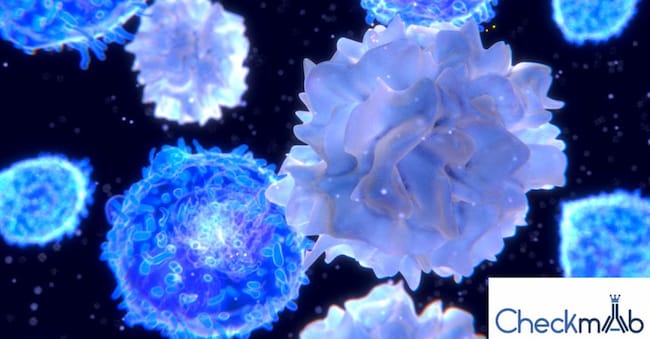
The Nobel Prize for Medicine 2025 has rewarded the discovery of regulatory T lymphocytes - the famous T Regs - that control the balance of the immune system and prevent the body's defences from turning against itself. But behind the news there is also an Italian story that speaks of technology transfer, patient capital and science capable of becoming industry. It is the story of CheckmAb, a spin-off of the University of Milan and the 'Invernizzi' National Institute of Molecular Genetics, founded by Professors Sergio Abrignani and Massimiliano Pagani, and directed by Dr Renata Grifantini.
The company, set up in 2018 and supported by Primo Capital's Health fund, participated by the Enpam Foundation, has built its therapeutic platform precisely around T Regs, the immune system's brake cells. The principle is simple and revolutionary: eliminate the T Regs that lurk in the tumour microenvironment, without affecting those that protect against the risk of autoimmunity. This frees up the anti-tumour immune response, avoiding the side effects that often force current immunotherapies to be suspended.
Phase 1 kicked off
'To be in the same field that today's Nobel Prize winner recognises as one of the most promising in modern medicine is a great satisfaction for us,' says Abrignani. 'It is confirmation that we are on the right track.' The confirmation also came from the market: in 2024 CheckmAb signed an agreement with Germany's Boehringer Ingelheim for up to €240 million, including milestone payments and royalties of up to 7%, for the clinical development of their monoclonal antibody. Phase 1 will start later this year in Germany and the US.
Behind the success, explains Grifantini, is 'a strategy of precision: we have identified molecules expressed only by intratumoral T regs, so our antibody acts almost exclusively in the tumour. The next step will be to make it even more akin to the physico-chemical conditions of the tumour microenvironment, such as pH'.
CheckmAb is one of the rare examples of Italian academic research that has succeeded in transforming itself into an industrial project on an international scale. This is thanks to a team that is used to moving between university and company. 'I, Pagani and Grifantini,' says Abrignani, 'all come from years of industrial research: we have learnt to ask the right questions, to think in terms of product and clinical value, not just knowledge.


