
Where do our taxes go? The indication in the mirror of the 730 form
Taxes are absorbed, in first place, by spending on pensions, accounting for just over 20% of the total

Key points
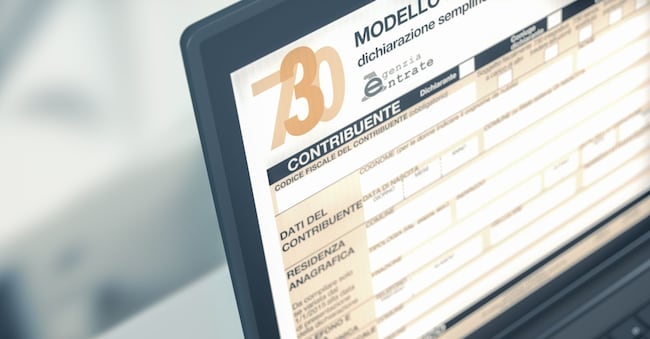
The file can also become a tax education tool. Next to the boxes of the compilation, next to the items of deductible charges and expenses, next to the summary statement that tells us whether we are in credit or debit with the tax authorities, there is also a mirror that graphically represents where our taxes end up.
An initiative that has been renewed for a few years now and in a way makes more and more taxpayers aware that the tax sacrifice of paying taxes is not in vain.
The amounts withheld during the year and settled by payroll adjustments are redistributed, therefore, into the various items that make up State expenditure. The allocation changes over time and is defined by the Accounting Department on the basis of priorities. The mirror is attached to the form 730, in the personal area and can be downloaded like the pre-filled form.
The destinations
Our taxes are absorbed, in first place, by spending on pensions, at a little over 20%, in second place, this year, is health care, with 18.06%, and in third place is spending on education, with 10.96%. In fourth place comes interest on public debt, 8.37%, and then gradually, seeing the impact decrease in percentage terms, support for defence and security, general government services, economy and labour (communications, agriculture, manufacturing), and transport. Concluding the list, with an allocation of around 2%, is support forenvironmental protection, culture and sport, the EU budget contribution, housing and spatial planning.
The note explaining the allocation informs that the total amount of taxes, in addition to the Irpef, also includes - if due - those relative to the regional and municipal Irpef surtaxes, the flat-rate tax on rents, the solidarity contribution, the advance payment for amounts subject to separate taxation, the substitute tax on performance bonuses, and the substitute tax for the advantageous regime and the flat-rate regime. Theallocation of the taxes - the Agency finally explains - 'was prepared on the basis of the analytical data on public expenditure processed by the Ministry of Economy and Finance'.

