The profile

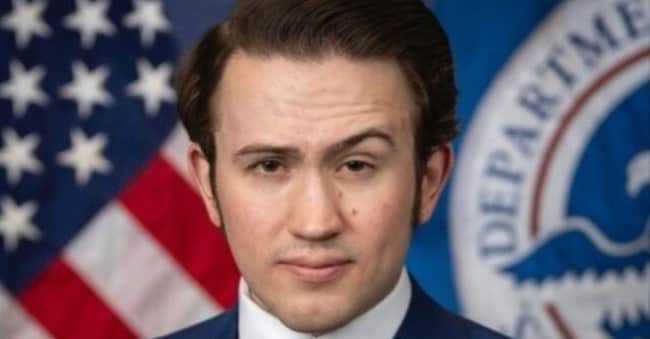
Who is Thomas Fugate, the 22-year-old head of US counter-terrorism

Chosen by Trump to lead CP3 at only 22 years of age, Fugate is the symbol of a new Republican lever. Young, inexperienced and loyal to the president, he will have to prove that he is up to the most delicate task of American homeland security

by Silvia Martelli

4' min read

4' min read

A few weeks after his appointment as head of the Center for Prevention Programs and Partnerships (CP3), the Department of Homeland Security (DHS) office in charge of domestic terrorism prevention in the United States, Thomas Fugate is now one of the most talked-about figures in the American political landscape. His selection by the Trump administration, in a context of growing domestic and international tensions, has ignited debate among analysts, politicians and the public.

But who is Thomas Fugate really? And why was he chosen to lead such a sensitive body?

Loading...

Originally from San Antonio, Texas, Fugate embodies the prototype of the young conservative activist who has emerged in recent years in the shadow of the Trumpian wave. Born in 2002, he graduated from the University of Texas with a degree in Politics and Law in May 2024. During his university years, he distinguished himself more for his political engagement than for academic merit: he participated in the Texas Civic Ambassadors programme and was active in conservative organisations and think tanks such as the Heritage Foundation. He also held internships in Republican parliamentary offices in the House of Representatives.

His CV, however, does not present any direct experience in the field of national security or the prevention of radicalisation. Prior to graduation, Fugate had worked odd jobs: from garden maintenance to shifts at H-E-B supermarkets. An ordinary trajectory until his involvement in Donald Trump's 2024 presidential campaign. It was there that he gained the attention of key figures in the Trumpian entourage.

The real leap comes after Trump's return to the White House. Within a short time, Fugate obtained a role on the presidential staff and was then named as William Braniff's successor at the head of CP3. An appointment that caused controversy not only because of the young Texan's inexperience, but also because of the circumstances that made it possible: Braniff, a veteran and respected scholar of radicalisation and domestic terrorism, resigned in controversy with the administration after drastic cuts to the centre and accusations (never proven) of progressive sympathies in some of the programmes it funded.

CP3, established under the Biden administration, was conceived as an integrated response to the growing phenomenon of ideologically, supremacist or politically motivated domestic violence. Under Braniff, it had about eighty employees and managed funds worth tens of millions of dollars. Today, under the new Trumpian administration, the centre is down to just over twenty employees and the budget has been almost wiped out.

Fugate's appointment has therefore taken on more political than technical significance. For the Trump administration, depowering CP3 means archiving an approach considered ideological, 'liberal' and even, according to some circles of the most radical right, 'anti-conservative'. "You don't need sociologists or educators to stop terrorists. It needs police. It needs repression,' said an advisor close to the president, summarising the pragmatic and muscular approach that characterises the new DHS line.

But Fugate's arrival at CP3 is not just an internal signal. American security, already under pressure due to the rekindling of tensions with Iran and threats of cross-revenge linked to the international context, is now also facing a fragile picture on the domestic front. Politically motivated shootings, threats to public officials and exasperated polarisation make fertile ground for violent drifts. For this very reason, many analysts considered the choice of an inexperienced profile like Fugate a gamble.

Criticism came across. Democratic Senator Chris Murphy wrote: '22 years. Never a day's experience fighting terrorism. But he is loyal to Trump, so he got the job. At a time when we fear Iranian attacks, this is who is protecting us'. Moderate figures in the Republican Party have also expressed misgivings, albeit often in a reserved form, fearing political repercussions for openly contradicting the president.

Those who know Fugate paint a mixed picture of him. Some speak of an ambitious guy with a natural talent for internal party dynamics, capable of quickly gaining the trust of the leadership. Others describe him as an idealist, fascinated by the rhetoric of 'lean government' and determined to reduce what he sees as waste and duplication in the national security system.

At the moment, Fugate has not yet publicly outlined an operational plan for the future of CP3. According to some sources, the real goal may be the progressive dismantling of the centre, considered by the new administration to be a legacy of the progressive era. Others suggest that the young executive may simply be a 'ferryman', chosen for his political allegiance and destined to occupy the role until a future deeper reorganisation of the DHS.

What is certain is that Thomas Fugate's name is destined to remain at the centre of the debate in the coming months. A symbol of a new generation of Republican leaders born and bred under the influence of Trumpism, he represents at the same time the unknown of a choice that could turn out to be either bold or fatal. At the heart of a bureaucratic and operational machine as complex as that of American security, the Texan outsider will now have to prove whether political loyalty can really replace experience or whether, on the contrary, he risks leaving the country more exposed to threats than ever.

Copyright reserved ©
Loading...

Brand connect

Loading...

Newsletter

Notizie e approfondimenti sugli avvenimenti politici, economici e finanziari.

Iscriviti