French elections, who won and who lost among the leaders
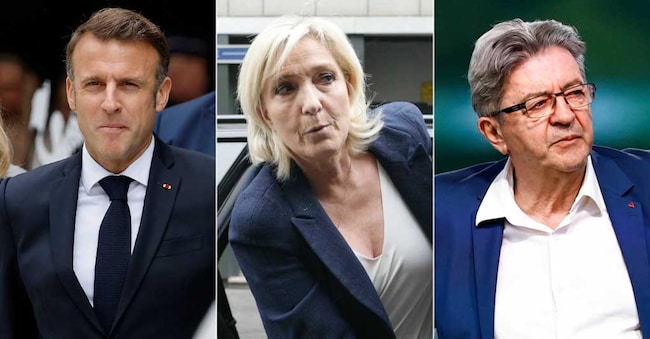
Marine Le Pen lost, Macron did not win. On the left, Mélenchon's star is tarnished

4' min read
4' min read
Who won? Who lost? After an election campaign full of twists and turns, including evidently the unforeseen ending (only glimpsed, really, from the polls), it is not impossible to see who has the best prospects for the political future today. The situation is developing rapidly, but a few sticking points are not missing.
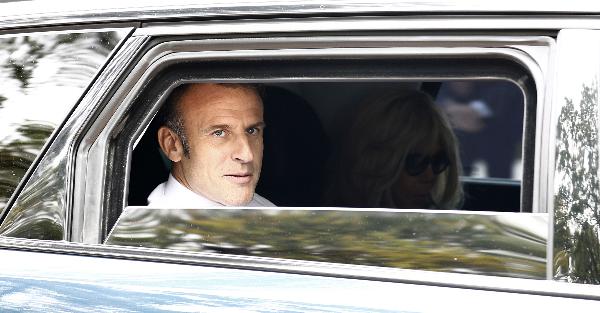
Emmanuel Macron
He did not lose, but he did not win. The president was strongly criticised for his decision to dissolve the Assemblée, without consulting practically anyone. Today, some re-evaluate his choice: the alternative would have been to see the government, a minority one, continually eroded by the propaganda of the 'victorious' Lepenists at the European elections. Not everything went as he wished, however, probably. He did not foresee the electoral cartel of the left, which is likely to disband soon (but not immediately). A scenario that saw Bardella in charge as prime minister, forced to give up immediately or after an unsuccessful attempt would have been much more politically profitable for the president. Now he will probably be forced into a difficult demi-cohabitation with the Républicains and a part of the left.
Gabriel Attal
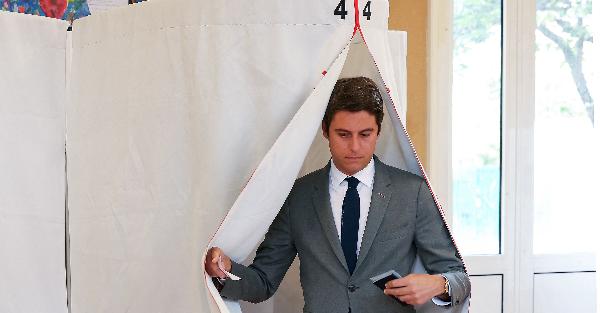
He stayed the course, and he was right. The young prime minister will not be reconfirmed in office, but he immediately opened the door to a coalition of the 'republican camp', from the Gaullists to the non-radical left, for the post-election period. His past proximity to the Parti socialiste has helped him keep the doors open. Many of his ministers, and Macron's allies, did not understand and adopted a more rigid approach, especially when it came to deciding desistances, renunciations of candidacy to favour the Rassemblement nationale. This was a mistake: today the left can claim to have contributed to the affirmation of the presidential camp and, at the same time, reproach the Macronians for not having done the same to the end. The distance with Bardella, in terms of competence and ability to govern, which emerged in the televised debate, certainly contributed to the final result.
Marine Le Pen
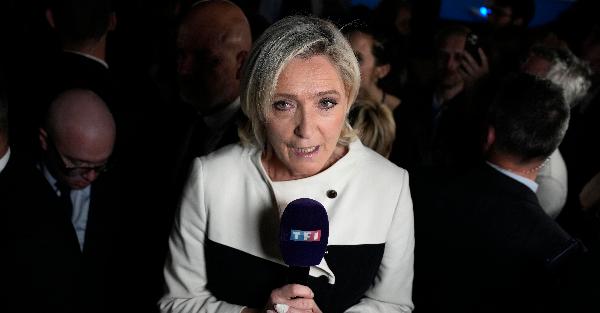
He lost, unequivocally. The victory at the European elections was the source of the defeat at the Legislative and now he has to dissolve this paradox in order to move forward. He has missed many steps: he has tried, in the last few days, to regain the visibility lost to his 'dauphin' Jordan Bardella, who is better at intercepting the youth vote (who remain, however, more loyal to the left) and in the de-diabolisation of the party. He hinted at a government in constant conflict with the president, ready to challenge constitutional practices; he evoked an administrative coup d'état, which did not take place, just as in recent weeks he had spoken of a coup d'état in the face of the Conseil Constitutionnel's rulings that abrogated certain provisions of the immigration law. Openly supported by Moscow, she took positions on Ukraine that, in fact, helped Putin, such as the no to the use of French arms on Russian territory. Too many candidates 'should not have been candidates', as party vice-president Louis Alliot admitted: they reminded us that the old Front national was not dead. Compared to Bardella, however, it was more 'institutional' in acknowledging defeat. As if she was not entirely unhappy about it: 'Victory has been postponed. She thinks about the presidential elections, but her time may be over.
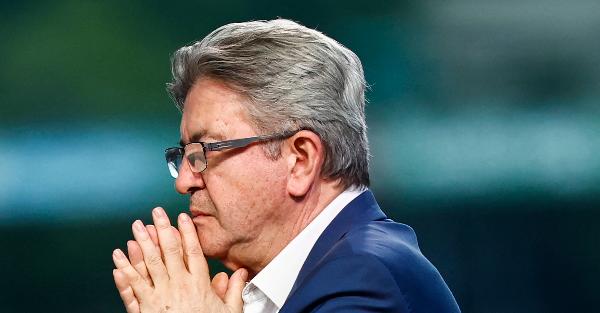
Jean-Luc Mélenchon
He wants to make believe he has won, but he is almost certainly destined to lose. He is not leading the coalition of the left, which resents him and, unlike in 2022, did not nominate him as its prime ministerial candidate, and even today, after the vote, he continues along this path. He has lost weight in the coalition, his rigidities have alienated several dissidents - some of whom were re-elected - and others disengaged from France Insoumise soon after the vote. He was adept at first claiming victory and the government post for the electoral cartel of the Nouveau front national, but he cannot achieve both: not to remain isolated and not to give in on his radical democracy programme. At least one of the two must be abandoned, more likely the former, also because of the overall political situation.