
Why is the Turin Giandujotto not yet PGI? A story of (dis)agreements and appeals that began in 2017
Recognition seemed just a step away and instead came an appeal to the TAR by Lindt: just the last stage (perhaps) of a path that proved long, difficult and bumpy to reach a shared specification to be filed in Brussels

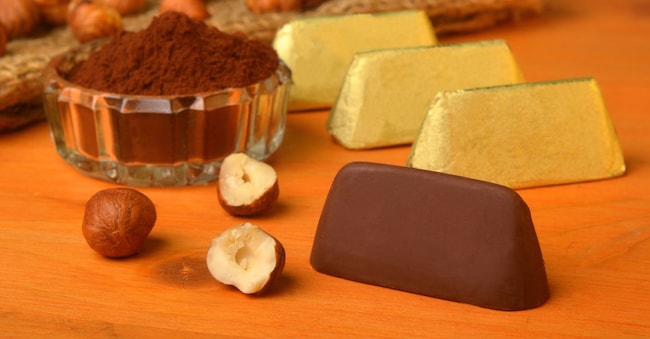
It was born under a lucky star and has had a prosperous, century-long existence. At least until 2017, when for the Giandujotto di Torino the process for European recognition of the Protected Geographical Indication (PGI) began. A path that proved to be long, difficult and bumpy due to the difficulty in agreeing on the specifications to be filed in Brussels. There are two opposing positions: on the one hand, the approximately 40 Piedmontese companies and artisans united in the Comitato Giandujotto di Torino, chaired by Guido Castagna, and on the other the Swiss company Lindt & Sprüngli, owner of the Caffarel brand.
That is to say the company where, in 1852, Paul Caffarel invented this chocolate, brilliantly and tastefully solving the scarcity of cocoa dictated by the drastic reductions imposed by the royal government on imports of 'luxury' goods. He dared to replace it in part with toasted Piedmontese round hazelnuts reduced to a paste: a successful combination. Once the recipe had been perfected, Caffarel had two more intuitions: he gave a precise name to this delicacy, christening it first 'Givu' and then 'Gianduia' in honour of the characteristic Piedmontese mask, and he cut it into small pieces, which were then wrapped in foil. Thus was born the first wrapped chocolate in history.
Since then, the success of Giandujotto has not stopped and nowadays hundreds of companies produce it, each according to their own recipe. To protect the traditional one, identifying 'the authentic giandujotto of Turin', the process for Igp recognition was therefore started, which should have been concluded quickly and instead, amidst various misadventures, has been going on for almost a decade.
The reason for the dispute was the Giandujotto 'recipe': the Committee's producers (such as Domori, Venchi, Gobino, Pastiglie Leone and Guido Castagna) defended the traditional recipe, which includes IGP Piedmont Hazelnuts (30 to 45%), sugar (20 to 45%) and cocoa (at least 25%) as main ingredients. Instead Lindt would have liked to include milk among the ingredients and change the amount of hazelnuts.
Two opposing positions and a stalemate that has lengthened the time for approval of the PGI. After the publication of the application for registration in the Official Journal on 9 May 2025, different objections arrived at the Ministry of Agriculture, Food Sovereignty and Forestry, which were then evaluated and rejected. Finally, on 23 March 2026, Masaf ordered the transmission of the specifications to the European Commission for recognition of the PGI, which should have arrived within the year.

