
Why duties on films hurt Hollywood in particular
The measure would mainly ruin the American film market and strengthen the European one

4' min read
Key points
- The digital question
- Duties on films shot abroad
- Against whom this measure is intended
- Hollywood was mainly made by Europeans
- European festivals acting as a sounding board for Hollywood
- A relationship that is never reciprocal
- The measure would strengthen European cinema
4' min read
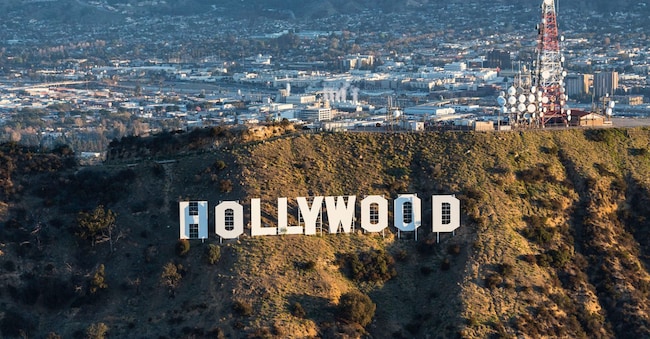
It is not yet known whether this is a boutade or will end up becoming a measure, but if the news about Trump's duties on foreign films announcement is confirmed, it would hurt Hollywood and the American film industry in particular.
The Digital Question
First of all because cinema is no longer cageable, as it used to be. This would be especially true for cinemas, but, as everyone knows, the current problem is that cinemas are dying everywhere and films are actually mostly seen on platforms. It is true that platforms respond to the country's Vpn, but it is easy, even for an adigital person, to get around this. And we also know that in every era each censorship in the film world has done nothing but good for films. Take, for instance, the banning of Bertolucci's The Last Tango in Paris: censorship made the film immortal, far beyond its (albeit high) artistic merits.
Duties on films shot abroad
.Thus, Trump would impose 100 per cent tariffs on films shot and produced abroad to ensure that Hollywood studios are at the centre of production and work is not outsourced. The initiative aims to counter what he calls 'a threat to national security' due to incentives offered by other countries to attract film productions. Trump described it as "a coordinated attack" that would also have propaganda implications. One of the 'special ambassadors' in Hollywood, Jon Voight, is said to be working on this plan. But apart from the fact that productions are now increasingly co-productions between different countries, one can only enjoy tax breaks in the country where one is filming, while the production remains overwhelmingly American. Wouldn't the duties then only apply to films shot entirely in the US? That really seems anachronistic.
Who this measure is designed against
.This would essentially go against Europe, Canada, England, Australia and New Zealand, because India is totally colonised by Bollywood, China has its own exclusively domestic market, and Africa, apart from the small number of cinemas, feeds mainly on Indian and Chinese cinema. Latin America has almost no pull, except for Mexico City. If the nations for which this measure was designed were to react by imposing the same duties on American cinema, then, at least as far as our hemisphere is concerned, which eats a lot of American cinema, the measure would only strengthen the production houses that have been formed in Europe and beyond. It would help Cinecittà, London, the Barrandov Studios in Prague and the Hungarian ones, just to give an example, and all the Italian film commissions, which have often done good for the cinema and the territory, not only to publicise the region, but because the films become a considerable economic flywheel for the workers and the local economy.
Hollywood was mainly made by Europeans
.Perhaps Trump forgets that Hollywood was mainly made by Europeans fleeing hunger or Hitler's Nazi madness, Fritz Lang being one example. Hollywood needs everyone, the very best, to be on the crest of a wave. How would it be if to this further restriction, Hollywood, which has always been ready to react politically (see #metoo), reacted with a voluntary exile of European filmmakers like Milena Canonero and Dante Ferretti, Oscar winners?


