
Wind power takes to the skies with kites and hot-air balloons
Systems located hundreds or thousands of metres above the ground benefit from stronger winds and have lower costs and a smaller environmental impact

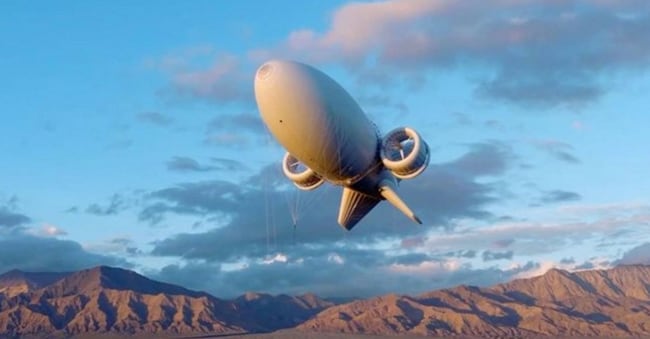
Kites and balloons are no longer merely toys, but pioneering tools for harnessing the untapped potential of high-altitude wind energy, which is inaccessible to traditional wind turbines.
Cost savings of up to 90%
Unlike the Earth’s surface, where friction with the ground and topographical obstacles slow down air currents, high altitudes offer much stronger, more stable and continuous winds, to the extent that the total wind energy theoretically available there is estimated to be hundreds of times greater than the energy requirements of the entire human race. Furthermore, high-altitude systems result in savings of up to 90 per cent in materials and production costs compared with traditional wind turbines, as they are made from lightweight materials, such as flexible kites, rigid flying wings or aerostats anchored to the ground by ultra-strong cables.
Not to mention their reduced environmental impact: as they do not require permanent infrastructure and operate hundreds or thousands of metres above the ground, they are virtually invisible. Yet, like other innovations, even these extremely versatile systems face the challenge of navigating the infamous ‘valley of death’ between the research and commercialisation stages, from which many inventions do not emerge unscathed.
The Chinese test at 4,000 metres
The latest developments in this field come from China, where the start-up Sawes successfully completed the first field test at the end of August of a flying wind turbine capable of reaching an altitude of up to 4,000 metres. It is called the S4000 and was developed in collaboration with Tsinghua University and the Aerospace Information Research Institute of the Chinese Academy of Sciences. The S4000 is comparable in size to a Boeing 747, but technically it is an airship – in other words, a giant helium-filled balloon. It is fitted with ultra-light turbines specifically designed to harness stronger and more consistent winds than those near the ground, and the electricity generated is transferred to the ground via a cable, meaning it remains tethered to the ground at all times. In this sense, it is more like a ‘balloon’ than an airship.
The ease with which it can be moved from one location to another is a very important feature of the S4000. According to Sawes Energy, founded in 2023, such a system would be very useful for supplying power to remote areas such as deserts, highlands, islands or areas affected by natural disasters, where the traditional electricity grid is not available. The S4000 is not the first aircraft the company has developed: it was preceded by the S1500 and S2000. The S6000 is also in the pipeline, designed to fly even higher. The higher it can fly, the stronger the winds, and therefore the more efficient the system: Sawes claims that the break-even point with traditional wind power is at around 3,000 metres, whilst at 9,000 metres the systems could operate for over 8,000 hours a year, with extremely low generation costs.

