Wine

Wine, promotion funds open the door to foreign markets

The latest CMO funding is 90 million, but since 2004, more than 1 billion has been allocated, leading to a 107% growth in turnover (4.5 billion) for large and emerging denominations

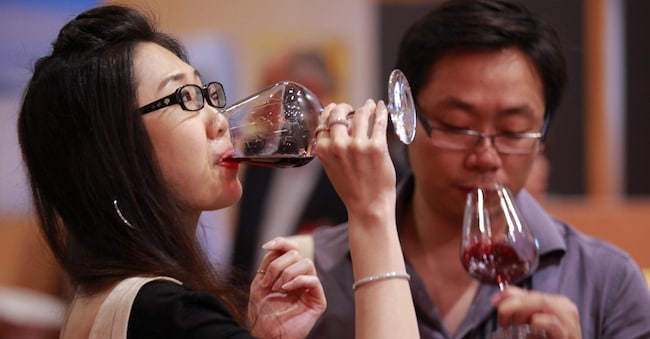
by Giorgio dell'Orefice

La gestione dei fondi. Quest’anno circa 22 milioni saranno gestiti dal ministero per iniziative  nazionali,  i restanti 78 saranno erogati  mediante bandi regionali. (Ansa)

4' min read

4' min read

In recent days, the Ministry of Agriculture and Food Sovereignty has launched, earlier than in previous years, the decree that gives the green light to the presentation of projects for the promotion of Italian wine on non-EU markets with funds allocated by the Common Market Organisation (CMO) for wine. The programmes must be submitted by 16 October.

Approximately 90 million euros are allocated for the year 2024-25 to co-finance projects at 50 per cent. Of this budget, 22 million will be managed centrally by the ministry for initiatives of national relevance, while the remaining 78 million will be disbursed locally through regional calls for proposals.

Loading...

This is a measure that is highly anticipated by producers and has historically been of great importance for Italian wine. According to EU Commission data between 2009 (the year in which the measure was instituted) and 2023, 1.113 billion euros were invested in wine promotion in third countries in Italy. Just under half of the total (2.55 billion) of the resources allocated to all member states. Much more than Spain (601 million) and France (598).

Investments that have undoubtedly paid off: from the launch of the measure to date, the Italian wine market in third countries has grown by 107% (excluding the United Kingdom) for a turnover that is now 4.5 billion.

An important measure, therefore, and one that is still much needed, particularly after a year like 2023 in which, thanks to inflation, Italian exports have slowed down, so that these investments are essential torevive consumption and identify new outlets. But despite the evidence, such contributions are in the future at risk. In the past few months in Brussels and in the wake of the anti-alcohol initiatives, the possibility of the Commission continuing to invest in wine promotion has been questioned.

Certainly, and as confirmed by the export figures, the CMO-promotion measure remains a best practice that, also because it is tailored to the system of consortia spread throughout Italy, has allowed the entire Italian wine sector to grow: from the large denominations to the emerging ones and, above all, to a network of small and very small companies that, without CMO support and without the consortia container, would not even have gone abroad to do promotion.

'We have always been users of this measure,' explains the director of the Consorzio del Brunello di Montalcino, Andrea Machetti - and we look with concern at the prospect that this measure may run out. An important lever even for an established brand like Brunello di Montalcino. In particular, we have used the incoming support provided by the measure, spending an average of 100 thousand euros per year. These are contributions to host foreign opinion leaders and operators in Montalcino who can then become ambassadors of our territory with important repercussions not only on wine sales but also on wine tourism".

"We are a young consortium, born only in 2018," adds the director of the Etna Doc Consortium, Maurizio Lunetta - and it has been three consecutive years that we have benefited from the measure. We also carry out other promotion initiatives with the funds of the Psr and those of Regulation 1144 of 2014, which allows us to field initiatives together with Alto Adige wines and Pecorino Romano DOP. But the CMO remains central to maintaining our positions in markets such as the US, the UK and Switzerland and to realise our Etna Days event where we bring about 45 opinion leaders from all over the world to Sicily'.

Funding for promotion can be used to strengthen abroad and grow but also to reposition oneself in the event of unforeseen events that are becoming increasingly frequent. They are convinced of this at the Consorzio dell'Asti Docg, a sparkling wine that has historically been appreciated in Russia and that is facing some difficulties because of this. 'In Russia,' explains president Stefano Ricagno, 'we ship an average of 15 million bottles of Asti Spumante out of the 55 million exported (to which 35 million bottles of Moscato d'Asti must be added). We are working on diversification and are looking at South America with Brazil, Colombia and Paraguay. And we are also encountering interest in China and South Korea with our sweet, aromatic and low-alcohol wines'.

Pending the decisions of Brussels, the promotion measure is still active and can still be improved. Of course, the launch of the decree with some important simplifications was welcomed by Federvini and the Italian Wine Union. But the frontier is the modification of the framework regulations governing investments. "The Masaf decree with the new simplifications is fine," commented the secretary general of the Italian Wine Union, Paolo Castelletti. Everything has been done to meet the request of companies to be able to plan their initiatives in a timely manner. But now - together with Masaf - we need to modify the decree in some of its fundamentals, so as to put a new device on the ground as early as next year'.

Copyright reserved ©

Brand connect

Loading...

Newsletter

Notizie e approfondimenti sugli avvenimenti politici, economici e finanziari.

Iscriviti