
Wine tourism: Umbria is banking on new international tourism routes
A discussion in Montefalco on strategies for the development of the regional wine sector. Umbria can strengthen its position thanks to the EU’s strategy to revitalise inland areas

Key points
Is wine the driving force behind tourism, or is tourism the catalyst for reviving the wine industry? This is the question that entrepreneurs, local councillors, researchers and opinion leaders discussed in recent days in Montefalco (Perugia) at a meeting entitled ‘The value of wine: economy, territory, quality. What future?’ organised by Coldiretti Umbria. The meeting sought to chart a course of development for a key sector of the Umbrian economy.
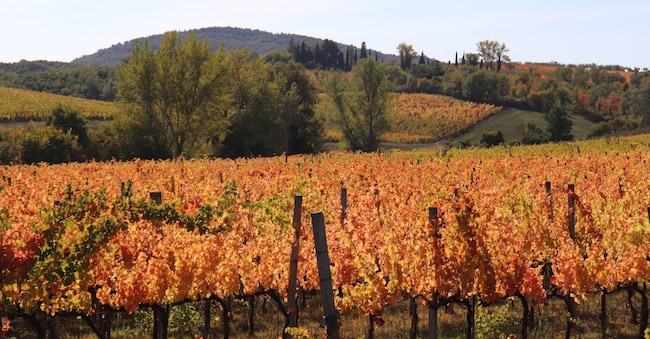
13,000 hectares of vineyards are cultivated in the region
A sector that boasts 13,000 hectares of vineyards and an average production of 500,000 hectolitres (13 DOC, 2 DOCG and 6 IGT), as well as estates with renowned brands such as Arnaldo Caprai (architect of the rediscovery of Sagrantino di Montefalco) or Lungarotti in Torgiano, whose cellar houses one of Italy’s first wine museums. Not to mention that straddling the border between Umbria and Lazio lies another heavyweight in the Italian wine world: the Famiglia Cotarella winery, founded by the internationally renowned oenologist Riccardo Cotarella together with his brother Renzo.
In 2026, the second-fastest-growing region in Italia in terms of tourist numbers
Umbrian wine now has the opportunity to realise its full potential thanks to new tourism routes. According to data from the Interior Ministry’s “Alloggiati Web” platform, Umbria is, after Calabria, the Italian region in which tourism grew the most in the first half of the year: +9.7 per cent in Umbria compared with +10.5 per cent in Calabria. This is well above the national average of +4.4 per cent.
We need to make tourism less seasonal and expand it to new destinations
“Tourism in Italia is set to grow again this year,” commented Maria Carmela Colaiacovo, tourism entrepreneur and chair of *Il Sole 24 Ore*. “And that was by no means a foregone conclusion. Looking ahead, the key priorities are seasonality management and diversification, focusing on areas beyond the major art cities.” In Brussels, a strategy is being developed to revitalise inland areas, and Umbria – thanks to its history, identity and culture – has everything it takes to play a leading role in this. “Meanwhile, food and wine,” added Colaiacovo, “which are already among Italia’s main tourist attractions, could prove decisive for regions such as Umbria. However, we need to invest in the right professional skills and expertise.”
Cotarella (Coldiretti): creating greater value for businesses
“Umbrian wine has great potential and quality,” concluded Dominga Cotarella, president of Coldiretti Umbria, “but we must create the conditions for this to translate into greater value for businesses. We need to strengthen strategies for promotion, innovation, collaboration and the promotion of origin, with policies that are increasingly capable of supporting the profitability and competitiveness of businesses.”


