

With Leipzig, the hybrid war is heating up. The Scandinavian drone agreement is reshaping defence in the south as well
The Merz government has claimed that the Kremlin was behind the armed drone that appeared at Leipzig Airport. On 28 August, Finland and Sweden decided to jointly monitor their borders and strengthen their defences: active and passive sensors, electronic surveillance and 30- and 40-millimetre weapons. This model is effective and could also be adopted in Italia and France.


Key points
The Merz government has claimed that the Kremlin was behind the armed drone that appeared at Leipzig Airport. This is the first time a European country has pointed the finger directly, and it comes after a summer in which Europe began to experience hybrid warfare with greater intensity. On 28 August, Finland and Sweden decided to jointly monitor Finnish territory and strengthen its defences against drones. This is not merely an extension of Nordic military cooperation. It is the first sign of a broader transformation: European defence is shifting its focus from border protection to managing threats that simultaneously traverse airspace, radio frequencies, computer networks, civilian infrastructure and public opinion. On 29 March, two drones entered south-eastern Finland during Ukrainian attacks on Russian infrastructure in the Gulf of Finland area. Finnish F/A-18s took off to identify them; the drones crashed near Kouvola. On 15 May Helsinki received even more alarming information: larger drones, equipped with heavier explosive payloads, might have diverted towards Uusimaa. An emergency alert was issued, anti-drone measures were stepped up, and air and maritime traffic was rerouted. The drones did not enter Finland, but the mere possibility of their arrival was enough to disrupt operations for three hours across a region encompassing Helsinki and a vital part of the national economy. This is the hidden cost of drone warfare. The damage does not begin with the impact, but with the uncertainty. An object off course forces the deployment of fighter jets, the activation of sensors, the mobilisation of the police and civil defence, the closure of sections of airspace, changes to navigation routes and the issuing of public warnings. The attacker – or even just an accident – thus imposes a cost on the defender that far exceeds the price of the aircraft itself.
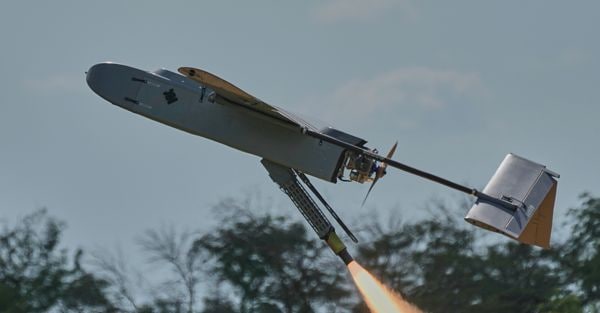
The agreement between Sweden and Finland
Finland has allocated a further 50.2 million euros in 2026: 44 million to the Border Guard and 6.2 million to the police. The aim is to build a layered network of sensors and countermeasures along the Russian border, on the coast and around sensitive infrastructure. Sweden is adding radar, electronic intelligence, electro-optical systems, jammers, cannons and a broader industrial base. The Gute II programme is worth 8.7 billion Swedish kronor and integrates command and control, active and passive sensors, electronic warfare and 30- and 40-millimetre weapons. A further 3.5 billion is earmarked for warning systems, interceptors and jamming devices, both portable and vehicle-mounted. Deliveries originally scheduled for 2036 have been brought forward to 2028. However, the political leap precedes the technological one. Since 2020, the Swedish government has been able to deploy its own forces to Finland to help prevent territorial violations. The 2022 bilateral agreement governs logistical and operational support in times of peace, crisis and war. This enables a Swedish presence, but does not transfer sovereignty: the mission, powers and use of force remain subject to Finnish decision-making. This is a crucial distinction, because detecting a drone does not automatically mean being able to shoot it down. It is necessary to determine whether it is civilian, criminal, hostile or simply off course; to assess the risk posed by debris; to decide whether to jam communications; and to protect frequencies used by aviation, emergency services and infrastructure.
The French Posture
Europe faces the same challenge. France has an anti-drone defence system integrated into its permanent air security posture, supported by more than seventy radars and detection and control centres. The Direction générale de l’armement has accelerated the procurement of jammers, interceptors, short-range systems and laser capabilities, establishing dedicated facilities for technologies with rapid development cycles by the end of 2025. In July 2026, it also began developing, in partnership with EOS Technologie, an anti-drone capability deployable from combat aircraft. Paris is attempting to integrate event protection, base defence and high-intensity warfare into a single architecture, ensuring that tools designed to stop small quadcopters are not mistaken for a sufficient response against autonomous swarms or loitering munitions.
Germany is tackling the issue from the closest possible perspective, and not merely in relation to incursions into its own territory. It is helping to protect the Baltic airspace with Eurofighters and supports the redeployment of NATO forces to the eastern flank. In January 2026, it ordered eight MQ-9B drones for maritime surveillance, with the first deliveries scheduled for 2028. Berlin has also purchased seven Eurodrone systems, each comprising three aircraft and two ground stations. The German paradox is clear: Germany must protect the Baltic, act as an industrial and logistical rear base and, at the same time, defend the ports, railways, depots and energy networks that enable allied reinforcements to reach the front line.
British moves
The United Kingdom brings to this framework its maritime capabilities and the structure of the Joint Expeditionary Force. London has deployed a specialist unit from the Royal Air Force to Denmark following a series of suspicious sightings, and has placed anti-drone defence at the centre of British exercises in the Baltic, in the North Atlantic and in the Arctic. The 2025 Strategic Review calls for ‘always-on’ military production, capable of adapting to the pace of innovation, whilst the agreement with Poland in May 2026 provides for a joint task force to develop the detection, neutralisation and rapid deployment of new technologies. For London, defending the North also means monitoring undersea cables, energy infrastructure and the movements of the Russian ‘shadow fleet’.

