

With the Middle Eastern game of Risk, Turkey is playing on several fronts, including the Caucasus
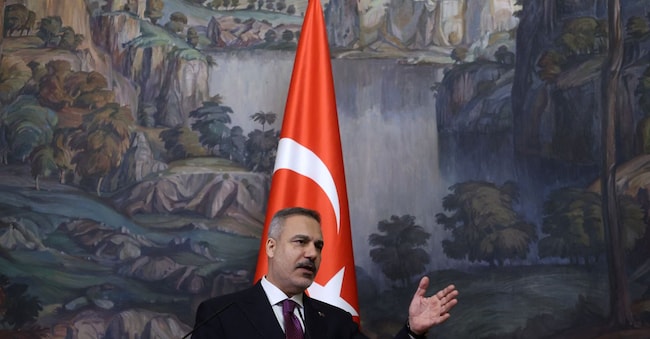
The diplomatic agenda of the Foreign Minister, Hakan Fidan (formerly head of the intelligence services), ranges from Russia to Canada. He is strengthening regional ties and looking to Azerbaijan to discuss gas and logistics corridors. These are vital for Europe

Key points
Asia, the Euro-Balkan neighbourhood, the Caucasus, the Middle East and relations with major players such as Russia and Canada. One need only analyse the diplomatic agenda for June of the Turkish Foreign Minister, Hakan Fidan, to understand how Ankara is operating on several fronts simultaneously. Visits to Singapore, Indonesia, South Korea and Bangladesh to seek a foothold in Asia. During the second week, a Turkey-Azerbaijan-Georgia trilateral meeting in Istanbul, the South-East European Cooperation Process summit and a visit to Bulgaria. In the last 15 days of June, Fidan focused on high-stakes issues. First, the Turkey–Egypt–Pakistan–Saudi Arabia meeting. Then meetings in Moscow and finally in Canada. A superficial analysis reveals a desire to maintain Turkey’s presence in areas that matter for trade, technology, investment and maritime security. This is certainly the case in Asia. Relations with Russia must certainly be viewed within the context of energy issues and stability in the Black Sea. The trip to Canada, by contrast, demonstrates a focus on relations with Western partners and a balance between regional commitments and diplomacy with G7/NATO countries. Not to mention that on 7 and 8 July, Ankara will host a major meeting between the North Atlantic Treaty Organisation and the Istanbul Cooperation Initiative (ICI), which brings together the United Arab Emirates, Kuwait, Qatar and Bahrain. The most interesting items on the agenda, in terms of their potential impact on the Mediterranean and Europe, were those on 8 and 9 June, when Fidan led the trilateral talks with Azerbaijan and Georgia. The key topics discussed were energy connectivity, mobility, East-West logistics corridors and raw materials. To better understand what Ankara’s next moves might be, it is worth reviewing the minister’s work over the last three years and his background.
The CV
Hakan Fidan is 57 years old, is at the height of his political career and is regarded as the most astute and influential man in Turkey after Recep Erdogan. He has been Foreign Minister since June 2023. He studied at the University of Maryland and, most notably, served as director of Turkey’s National Intelligence Organisation, Millî İstihbarat Teşkilâtı (MIT), for over 12 years. The outbreak of the Arab-Israeli war and the Israeli Defence Forces’ entry into Gaza, following the massacre on 7 October, served as a further springboard for him. Even in the preceding months, he had sought to use his past experience to engage in dialogue with Iran, weaken Hamas and forge a special relationship with Iraq.
Intelligence
In 2014, whilst posing as an agent during an official visit by Erdogan to Iran, Fidan is said to have deviated from the itinerary for a secret meeting in a garage with Qasem Soleimani, the commander of the Revolutionary Guards who was killed in a US-authorised airstrike at Baghdad airport six years later. Some sought to portray him as an Iranian asset within Turkish circles. Rumours. What was true, however, was his extensive network of contacts in Tehran. In early September 2023, he returned to Iran to discuss possible bilateral cooperation. The following October, he attended a three-way meeting (between Iranians, Azerbaijanis and Armenians) on the future of Nagorno-Karabakh. Once again, the focus was on the Caucasus. At the end of August 2023, the same Turkish minister travelled to Iraq. During his visit, he spoke of terrorism and the fight against the Kurdish PKK. The Iraqi government appeared to open its doors, and in return asked for help with new motorways and water pipelines. These were no coincidence. They were intended to be coordinated with Iran, on the one hand, and Russia, on the other. In 2024, we witnessed the fall of Assad in Syria, the weakening of Hezbollah, culminating in the US bombing of Iranian nuclear sites in 2025. Meanwhile, that dialogue with Tehran, intertwined with developments in Iraq, also had repercussions for Gaza.
Energy
For years, Fidan has maintained covert channels in Baghdad that have enabled him to carry out large-scale operations against the Kurds. Those channels also enabled him to operate on multiple fronts and to be, in effect, the true architect of the rapprochement with Saudi Arabia and, from 2017 onwards, with Egypt. To add another factor: a split within the Muslim Brotherhood would have benefited Turkey. This intense diplomatic effort centres on the Middle Eastern theatre but is being used by Ankara to secure a strong role in the Caucasus. The 2023 meeting at which Nagorno-Karabakh was discussed has numerous points in common with the recent meeting with Azerbaijan and Georgia. The joint communiqué issued on 8 June highlights, beyond the importance of regional stability, the strategic role of the Baku–Tbilisi–Ceyhan pipeline in supplying energy to Europe and the progress made with the Trans-Caspian East–West Middle Corridor logistics project. This is where Turkey is thinking in the long term. The IMEC corridor and the alternative routes to Hormuz, which will inevitably develop in the coming years, involve a number of key players. Everyone knows that Europe will need energy and raw materials. For Ankara, being at the heart of one of these routes means securing a market and a strategic role. Turkey certainly cannot allow Europe to end up in a sort of unhappy decline, as it represents one of Ankara’s main export markets. At the same time, it wants to hold the keys to the supply routes. This is a project that began years ago and has been methodically pursued, whilst Fidan shuffles the cards across different tables. This comes as no surprise at all. Suffice it to say that the Erdogan government has drawn up a document of around 1,000 pages on the investments it intends to implement by 2040. Fidan plays a key role in this. Especially in recent weeks. The Middle Eastern chess game is intensifying. The almost impossible agreement between Israel and Lebanon aims to establish an IDF presence that is intended to guarantee a sort of buffer state. But at the same time, it also involves the presence of an organisation such as Hezbollah – weakened, yet difficult to disarm. So whilst deterrence is being played out in the Strait of Hormuz and Iran remains a dangerous but inevitable interlocutor, the skill of Turkey’s political leadership lies in looking beyond and positioning itself on chessboards that are geographically somewhat further afield – such as the Caucasus – but which will be crucial over the next decade.

