

Women and science, only 26% engaged in AI: 'More inclusion needed, gap to be closed'
Artificial intelligence is revolutionising medical radiology, but the proportion of women even in top positions is still low

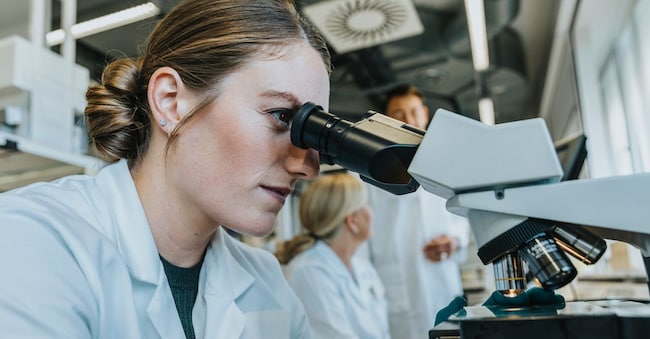
Today in Italia, only 34% of women are engaged in Steam disciplines, but an even smaller percentage, 26%, carry out activities directly related to the use of artificial intelligence. The confirmation comes from a Unesco survey that underlines how strong the gap still needs to be bridged to achieve gender equality. As per tradition, on the occasion of the International Day of Women and Girls in Science, which is celebrated today all over the planet, Sirm (Società Italiana di Radiologia Medica e Interventistica), promoted today at the Centro Diagnostico Italiano in Milan, in collaboration with Fondazione Bracco, the 2026 edition on 'Artificial Intelligence: knowledge, responsibility and participation'. A gap that also concerns radiology, a field in which AI is already profoundly transforming clinical practice.
The impact of Ia in diagnostics
"This is by now a traditional appointment for Sirm," explains Nicoletta Gandolfo, National President and Director of the Imaging Department of the Metropolitan Hospital of Genoa, "every 11 February, at the proposal of our DEI (Diversity, Equity, and Inclusion) Commission, to focus on a topic that is still little talked about, but of great topical interest. Artificial intelligence is opening up fascinating scenarios even in radiology, but the low presence of women requires deep reflection and a decisive cultural change, to the benefit of patients. The application of AI to radiology equipment now makes it possible to optimise diagnostic performance to unprecedented levels, customising the setting of machines to the individual patient. This translates into greater diagnostic accuracy, reduced execution time, lower dose exposure to ionising radiation, and advanced diagnostic support. Artificial intelligence, in fact, is a valid aid both in the identification of lesions that are difficult to see with the human eye, and in the interpretation of images, contributing to a more correct and accurate characterisation of the alterations detected, always under the control and responsibility of the doctor'. "There is no doubt that artificial intelligence now stands as an auxiliary tool alongside the irreplaceable figure of the medical radiologist," adds Luca Brunese, President-elect of Sirm. "It is also a means of exploring a new frontier of radiological diagnostics that is no longer just about images, but is projected towards the interpretation of numerical data linked to the image, in support of the radiologist. A radiology that evolves: thanks to artificial intelligence, the image also becomes quantitative data, opening up new possibilities in terms of early diagnosis, risk stratification and precision medicine'.
The role of women: a change in progress
'A revolution, however, that must be governed and managed in the best possible way,' explains Stefania Montemezzi, President of the DEI Commission. This is why we need to increase the role of women in the Steam areas with a change of point of view and a greater commitment to inclusion, as is reiterated in today's conference at the diagnostic centre. Italia, as we know, is a country that has historically pushed women less towards scientific studies and professions. Fortunately, we are seeing a reversal of this trend, even in top positions'. "Finally, not only in radiology but in all of medicine, including oncology, there is a full awareness of how indispensable the female gaze is, capable of bringing different points of view and renewing languages and approaches in every professional context,' emphasises Rossana Berardi, President-elect of Aiom. 'The under-representation of women, particularly in high-tech sectors such as artificial intelligence and in top positions, is not a neutral fact: it is the result of cultural and organisational choices that must be corrected. There is still a long way to go, but change has begun and cannot be left to the goodwill of individuals, but must become a political and institutional priority. Scientific societies have a duty to lead this transformation, promoting inclusion, access to expertise and equal opportunities, as shown by the concrete commitment of Aiom and Sirm. Artificial intelligence represents a great opportunity and can be developed in full and virtuous synergy with doctors and all healthcare professionals, fully enhancing the contribution of women'. 'For this revolution to be truly ethical, responsible and participatory,' the Sirm President concludes, 'it is essential to promote greater inclusion of women in AI development, research and application processes. Filling this gap is not just a matter of equity, but of quality of care and scientific progress'.

