
Work, how to make humans coexist with humanoid 'colleagues' in the factory
In the case of accidents, full insurance and indemnity protection for the worker applies according to Inail, and there is the same assessment of liability. From January 2027 comes the EU Machinery Regulation

Key points
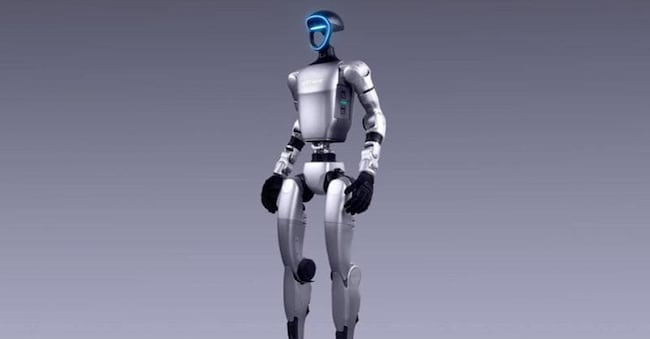
Although there is still no stable interpretative reference, the arrival of the humanoid 'colleague' in the company will be no more and no less than the arrival of a new machine. From Inail they explain that it is 'the direct evolution of the introduction of robotics in production processes', 'driven by the integration of advanced artificial intelligence systems'.
The risks ...
With increased risks, but also additional advantages. Starting with the first, there is certainly an issue of dynamic stability because unlike traditional robots that are anchored to the ground, humanoids can be bipedal: this generates the risk of the machine falling on the human. Another risk is unpredictable interaction: the AI-based decision-making autonomy of the humanoid requires highly refined algorithms that can interpret the movements of the human worker in real time to avoid clashes with the humanoid. A third risk is the cognitive stress or technostress that working side by side with a human-like machine can generate.
... and the advantages
Coming to the benefits, they are certainly very important, as Inail points out. One third of the total accidents recorded each year in companies concern slips, trips, falls and manual handling of loads. The introduction of humanoid colleagues will make it possible to delegate precisely to them tasks that are exhausting and unsafe for the human anatomy.
What happens in the event of an accident
In this context, what happens in the case of accidents or work-related injuries caused by humanoids? The approach, as the Institute explains, rests on two pillars. The first provides for full insurance and indemnity protection of the human worker. This means that an accident caused by a humanoid robot is fully covered by the institutional protection against occupational accidents and the institute guarantees the health and economic benefits provided by law. The second pillar concerns the establishment of liability. Similarly to any industrial machinery, the inspection and legal assessment will evaluate the employer's correct execution of the risk assessment. This means that inspectors will have to check whether the humanoid complies with the CE marking requirements, whether the safety systems are properly integrated into the production cycle and, above all, whether the workers have been properly trained, informed and instructed to cohabit with the automaton.
National and international technical standardisation
On the humanoids there is a constant and intense work of technical standardisation both nationally (UNI) and internationally (CEN and ISO), which also sees the active participation of Inail, so that the adoption of humanoids takes place in total safety. The European Machinery Regulation 2023/1230 that will come into force from January 2027 already indicates the requirements that robotic systems and autonomous machines must meet. Among the main ones are resistance to intentional external influences such as interference or tampering, stability of safety function limits even during the learning phase, and then tracking of interventions and software version. While the technical-regulatory framework is still evolving, Inail is moving proactively, as shown by the ongoing projects with the IIT in Genoa and the collaborative research calls.

