
Aism-Fism

World Multiple Sclerosis Day: 78% of patients dissatisfied with treatment, 14,000 are invisible

The 'Hard to Reach' project and the MS Barometer are an urgent call to build an integrated and humanised network that, for many, does not exist today
by Ernesto Diffidenti

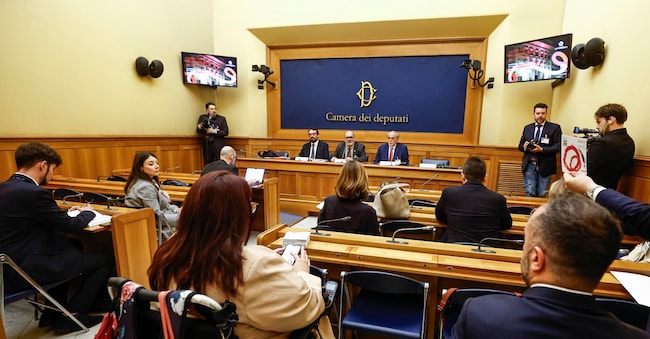
Francesco Vacca, Presidente Nazionale AISM, Mario Alberto Battaglia, Presidente FISM e Presidente MSIF, Tommaso Manacorda, durante la Conferenza Stampa dell’AISM di presentazione dei dati del Barometro 2025 e gli esiti della ricerca, Hard to Reach, presso la Camera dei Deputati ,Roma, 29 maggio 2025. ANSA/ANGELO CARCONI (NPK)

3' min read

3' min read

There are approximately 144,000 Italians living with multiple sclerosis (MS), but one in ten is invisible to the healthcare system. They seek answers, ask for assistance, but often come up against walls of silence and bureaucracy. They are the Hard to Reach, those people whom the system fails to reach, fails to recognise, fails to take in charge. We are talking about more than 14,000 patients who live without a certain reference point, without adequate care and social assistance paths.

The figure emerges from the 'Hard to Reach' project, carried out by the Italian Multiple Sclerosis Foundation (Fism) with the support of the Ministry of Health and presented at the Chamber of Deputies together with the 'MS and Related Diseases Barometer 2025' produced by the Italian Multiple Sclerosis Association (Aism) for World Multiple Sclerosis Day on 30 May, on which occasion the facade of Palazzo Chigi will also be dyed red.

Loading...

Hard to Reach: more needs, less answers

The 14,000 people the healthcare system does not intercept are between 45 and 60 years old, live with eight MS symptoms, and in 47% of cases also face other concomitant chronic diseases. 61% see their rehabilitation needs unmet, while 59% have no psychological support. After hospitalisation, 62.3% receive no help and 45.3% need home care but two thirds of them fail to get it.

Coping with the disease also means putting 'your hand in your wallet': 65% had to pay for specialist services out of their own pocket because the public system did not respond. And then there is social isolation, reported by 57% of people. For some, not even family or friends manage to represent a point of reference.

The network in crisis: the risk of exclusion is everywhere

According to data from the MS Barometer 2025, however, all people with MS are at risk of exclusion. In fact, 78% of the 144,000 patients have at least one unmet need, 33.8% have three or more, without adequate responses. 76.5% of people with MS have experienced at least one form of discrimination, at work, with bureaucracy, in essential services. 50% of those who work are afraid of losing their jobs, because the market does not adapt to those with a chronic illness or disability.

Social costs also weigh on household budgets

The average overall social cost of MS is EUR 46,400 per person per year, a figure that rises to over EUR 63,000 in the most severe cases. In these, families spend more than EUR 14,000 per year out of their own pocket, mainly to cover the costs of care.

Multiple sclerosis costs Italian society EUR 6.7 billion per year. However, public expenditure per person with MS is between 22,000 and 23,000 euros per year, with no proportional increase as the disability increases, highlighting the inadequacy of responses in the most severe cases.

This is not only an issue of equity, but also of system efficiency. The loss of employment of people with MS and their caregivers generates an economic impact estimated at EUR 2.5 billion of GDP lost each year.

Aism: urgent change of pace needed

"We cannot accept the risk that tens of thousands of people remain excluded because the services are not activated. The Barometer is an urgent call to build an integrated and humanised network, which today, for many, does not exist - says Francesco Vacca, president of Aism -. The Association makes its commitment available for a shared agenda that ensures every person the right to realise their own life project."

"We need a new pact between health, social, territorial and people,' adds Mario Alberto Battaglia, president of the FISM. 'We must make the Diagnostic Therapeutic Assistance Pathways (PdTA) fully operational, strengthen the network of MS Centres, and invest in processes such as the Life Project envisaged by the Disability Reform'.

Tow to Meet the MS and Related Diseases 2030 Agenda

On the occasion of World Multiple Sclerosis Day, Aism launches a new large public consultation for the MS and related diseases agenda towards 2030. A shared pathway to rethink the care system, break down barriers and guarantee adequate rights and services to all people with MS.

"We invite all people with MS, families, professionals and institutions to contribute," says Vacca. "Only together can we build a fairer, more inclusive and truly person-centred future."

Aism plays its part, with 30 open yards and #1000azionioltrelaSM, to bring the demands of people with disabilities into every reform - from the health plan to the welfare system - and to write, together, the MS 2030 Agenda.

Copyright reserved ©
Loading...

Brand connect

Loading...

Newsletter

Notizie e approfondimenti sugli avvenimenti politici, economici e finanziari.

Iscriviti