
Xi Jinping promotes a new global order at the Shanghai Cooperation Organisation summit
Xi Jinping announced at the Shanghai Cooperation Organisation summit in China his desire to transform the organisation into a global benchmark alternative to US hegemony, promoting a multipolar world and inclusive globalisation. He also announced investments and loans to strengthen the bloc of member countries

3' min read
3' min read
From our correspondent
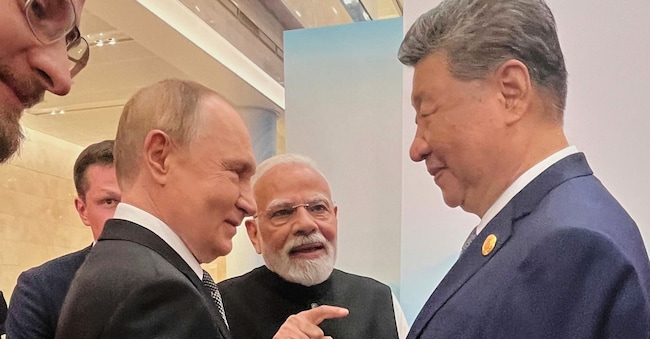
NEW DELHI - Chinese President Xi Jinping has announced that China will work with all member countries of the Shanghai Cooperation Organisation (SCO) to turn it into a reference point for the Global South and - in effect - lay the foundations for a new global order alternative to the American one.
"We must support an egalitarian and orderly transition to a multipolar world and inclusive economic globalisation, as well as promote the emergence of a fairer and more equitable system of global governance," Xi said as he opened the proceedings of the ongoing Sco summit in Tianjin, China. In the host's plans, economic cooperation will play a central role. "We must take advantage of the gigantic scale of our markets to smoothen trade and investment," Xi explained, urging the bloc to strengthen cooperation in areas such as energy, infrastructure, science, technology and artificial intelligence.
The attack on the United States
.While not mentioning the United States, the Chinese president also criticised 'hegemonism and the politics of force' that mark 'a world of turbulence and change'. Xi called on the leaders present, including Russia's Vladimir Putin and India's Narendra Modi, to choose "fairness and justice" against "the Cold War mentality". No later than Sunday, UN Secretary General António Guterres declared that China plays a 'fundamental' role in supporting global multilateralism. Indian Prime Minister Narendra Modi echoed him from the summit on Monday, calling the Shanghai Cooperation Organisation, or SCO, 'a beacon of multilateralism'.
The SCO has almost doubled its membership since it was founded in 2001 by China, Russia, Kazakhstan, Kyrgyzstan, Tajikistan and Uzbekistan. India, Pakistan and Iran joined later. Including observers and partners, the number of countries involved in various capacities comes to 26, with some - including Myanmar and Turkey - aspiring to full membership.


