Xiaomi 17T Pro: in pursuit of the endless battery
We’ve tested the new mobile phone from the Chinese manufacturer that’s taking on the €1,000 giants with a 7,000 mAh molecular battery

-U41013352177WqG-1440x752@IlSole24Ore-Web.jpg?r=650x341)
Today’s smartphone market is like a block of flats where every floor is the same. There’s the mid-range segment, which is the most crowded; the premium segment, which is the penthouse where you’ll find iPhones, Samsung Galaxies and Pro models; and the lower floors, where a phone must cost no more than two or three hundred euros. Xiaomi has decided to change the window frames and knock down a wall. It’s called the 17T Pro and, to understand what we’re talking about, we need to look at two figures: 7,000 and 899. The first represents the battery’s capacity in milliampere-hours, the second the number of euros needed to put it in your pocket.
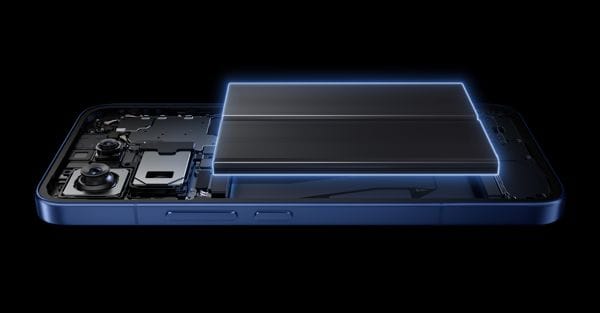
Let’s start with physics, which is a stubborn science. Until recently, a phone’s battery life was linked to its thickness: the more power you wanted, the heavier the ‘brick’ became. Xiaomi has got round this by changing the internal chemistry and switching to silicon-carbon. Imagine the old battery as a box full of oranges, where there’s a lot of empty space between each piece of fruit. Silicon-carbon works like a box of sand: the grains fill every millimetre of space.
Then there’s the price factor. This phone has a list price of 899.90 euros, but you can already find it for around 700 euros as the market begins to fluctuate. Its big brother, the Xiaomi 17 Ultra, is priced at €1,499.90. The maths tells us there’s a difference of €600 – a 40 per cent cut in the price. And yet, under the bonnet, the engine performs almost identically.
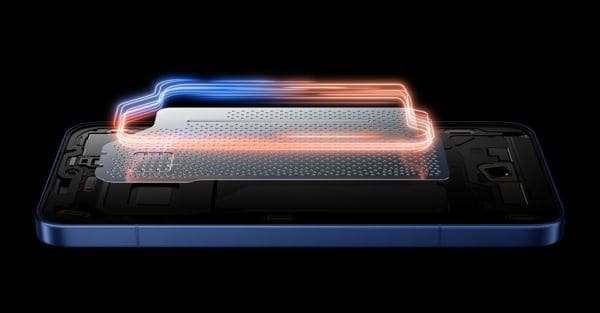
At the heart of the device is the MediaTek Dimensity 9500. In computational tests, it delivers a 32 per cent improvement in single-core performance and a 33 per cent improvement in graphics performance compared to last year. This means the architecture handles data flows without heating up the body, avoiding the phenomenon known as thermal throttling – which is the elegant way engineers describe the phone slowing down to prevent it from catching fire. On the front is a 144 Hz AMOLED display that reaches 3,500 nits in sunlight – a brightness like a lighthouse at night – but can be dimmed to just one nit in the dark so as not to damage the retina.
The camera system is powered by a dual-core Leica system. The main Light Fusion 950 sensor and the 5x periscopic telephoto lens operate at a focal length of 115 millimetres. It’s like having a telescope in your pocket that captures light without blurring the details.