Mobile World Congress

Xiaomi launches the 17 Ultra and a Leica special edition: all the news

The Chinese brand, Europe's third largest smartphone manufacturer, revamps its camera division to push at the high-end of the market

by correspondent Luca Salvioli

Il nuovo Xiaomi 17 Ultra

4' min read

Translated by AI
Versione italiana

4' min read

Translated by AI
Versione italiana

The focus is on photos. Which is nothing new in the way smartphones have evolved, but the push, also in terms of communication and positioning, is decisive. Xiaomi is relaunching the premium segment with the new 17 Series, a generation that marks a further step in its collaboration with Leica. A collaboration that, in addition to the 17 Series, takes a leap forward with a new smartphone developed together, with Leica design and colours.

At the Mobile World Congress in Barcelona, the Chinese group, the third largest smartphone manufacturer in Europe, will present its first event of the weekend.

Loading...

William Lu, president of the Xiaomi Group, introduces the company's variety of businesses in addition to talking about smartphones: in fact, an avalanche of technology is presented on stage. The new Xiaomi Scooter 6 Series scooter, the Xiaomi Watch 5, the Pad 8 Series tablet, Xiaomi Tag, which officially becomes a competitor to Apple's AirTags because it is compatible with both Apple Find My and Google's AndroidFind Hub, and an ultra-slim 15W external powerbank battery also presented, also in the promo, magnetically attached to an iPhone.

A product ecosystem that relies on investment: Xiaomi will put USD 24 billion into research and development over the next five years, Lu announced.

The new Xiaomi 17 Ultra

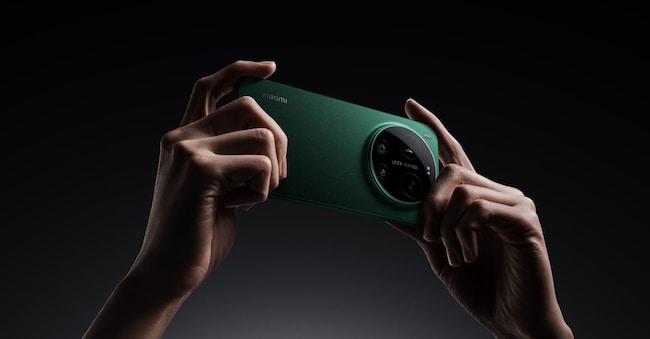
The 17 Ultra is the flagship model of the new smartphone range. The design remains consistent with the camera-inspired Ultra line, but becomes thinner and lighter (8.29 mm, 218.4 g). The camera module has been revised and is less bulky than in previous generations.

The processor is the top-of-the-line Snapdragon 8 Elite Gen 5 3 nanometre processor, coupled with a 6,000 mAh silicon-carbon battery (about 15 per cent more than the previous generation). Charging goes up to 90W with PPS support also for third-party chargers, 50W wireless and reverse wireless.

The display goes from 2K to 1.5K, a choice that on paper may seem a step backwards, but with the new full RGB panel (no longer PenTile), it maintains the same perceived sharpness while reducing power consumption. Resistance also improves thanks to the proprietary glass.

New: 1-inch sensor with Lofic technology

The real novelty is the new 1-inch main sensor with Lofic technology. It translates into an evolution in light management: an additional layer at the hardware level extends the dynamic range and improves light absorption by up to 6.3 times compared to the previous generation, says Xiaomi.

As a practical effect, better backlighting, less burnt highlights, more legible shadows and less dependence on software HDR. Video with 4K recording at 120 fps and 10-bit Dolby Vision and again more realistic colours. For the first time on a smartphone Xiaomi also introduces a glass element inside the main lens.

The zoom is remarkable, it is evident even at first use: the 200 megapixel telephoto lens retains the large sensor (1/1.4"), but introduces Leica APO treatment for the reduction of chromatic aberrations and an internal mechanical zoom system that covers focal lengths from 75 mm to 100 mm equivalent without resorting to digital cropping alone. The Xiaomi 17 Ultra starts at €1,499.

Xiaomi 17, the most compact model

Alongside the Ultra comes the Xiaomi 17, a compact 6.3-inch version, under 200 grams and with very thin bezels.

It integrates three 50 MP sensors, a new almost 1-inch main sensor, a floating telephoto with macro function and a 50 MP selfie with autofocus. The battery increases to 6,330 mAh (+29% compared to the previous generation), with 100W charging and 50W wireless charging, all powered by the Snapdragon 8 Elite Gen 5. The Xiaomi 17 starts at €999.

Target high-end smartphones

The launch will be accompanied by a particularly aggressive offer of coupons, extra trade-ins, and bundles with QLED TVs, a clear sign of the desire to sing on market share at the high end.

Leica Special Edition

Mattias Harsch, CEO Leica Camera AG, says from the stage that 'the advent of mobile was an extension of photographic capabilities, not the end' but a new expressiveness. Leica actually started collaborating with smarpthone manufacturers several years ago. In the beginning it was Huawei, the first Chinese brand to gain large market shares in Europe and to start a collaboration with the German company.

Today, the most accomplished expression is the new Leica Leitzphone. It has the colours and design of Leica. Definitely recognisable by the physical bezel surrounding the camera, which you turn with your hand, recalling a more traditional photographic experience. It costs 1,999 euros.

Xiaomi third in the European market

In 2025, the European smartphone market declined slightly by 1 per cent to 134.2 million units, according to Omdia. Weak demand and new EU regulations on eco-design (more durable and repairable smartphones, longer-lasting batteries, guaranteed spare parts, minimal software updates and mandatory energy labelling) and mandatory USB-C (the latter only impacting Apple), which have slowed down replacement cycles, are the reasons for this.

Samsung remains the leader with 46.6 million units sold, while Apple is second at 27%. Also in the top five is Xiaomi (16%, 21.8 million), followed by Motorola (6%) and Honor (4%).

Copyright reserved ©
Loading...

Brand connect

Loading...

Newsletter

Notizie e approfondimenti sugli avvenimenti politici, economici e finanziari.

Iscriviti