Yayoi Kusama: her political and revolutionary fashion before Louis Vuitton
Before her famous collaborations with the brand, the artist had been at the heart of New York’s cultural scene in the 1960s and 1970s, not least through the clothes she sold in her Manhattan boutique

-U81676275523hJg-1440x752@IlSole24Ore-Web.jpg?r=650x341)
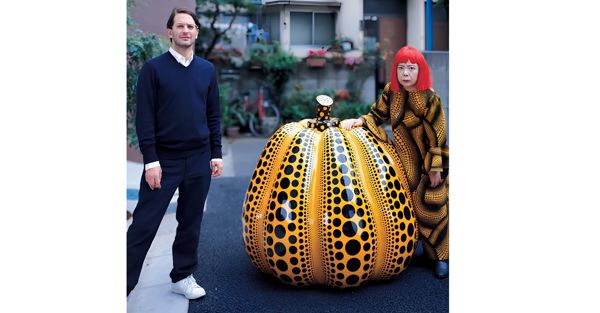
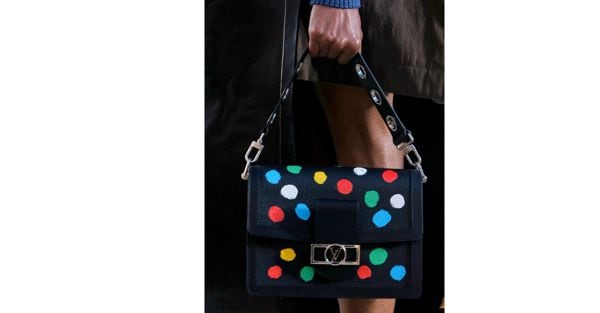
‘My costumes always hint at the path of the new generation’: Yayoi Kusama, the Japanese artist, had no doubts who passed away at the age of 97. Known and loved above all for her polka-dot aesthetic – the ‘polka dots’ that, over more than 70 years of her artistic career, have covered walls, shops, parks and handbags – Kusama had a deep connection with fashion, which began well before her collaboration with Louis Vuitton, which in 2012 brought her art into the fashion industry.
For her, fashion was, first and foremost, art; the clothes depicted in her paintings, and what to wear, were both an aesthetic and a political choice. In her native Japan, during the Second World War, whilst not yet twenty, she had worked as a seamstress in a parachute factory, and immediately after the end of the war she defied her parents’ wishes – who envisaged a future for her as a wife and mother – by going to Kyoto, where she would study the Nihonga style, traditional Japanese painting.
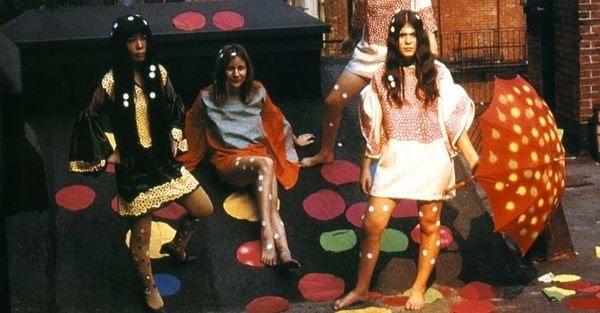
But her artistic journey would soon break with tradition: after discovering Georgia O’Keeffe’s works in a bookshop, she wrote to her, sending her some watercolours. The American artist replied enthusiastically, inviting her to move across the Atlantic, which Kusama did in 1958: she arrived in New York, the cradle of the avant-garde movements, first and foremost Pop Art, and initially supported herself by selling kimonos she had brought with her from Japan. But she soon found her own voice and her own space, thanks, once again, to fashion: in her ‘happenings’ – events combining performance art and activism – clothing played a fundamental role.
-U23178478722KDB-600x313@IlSole24Ore-Web.jpg)
She covers sheath dresses and coats with pasta, flowers or phallic shapes, before painting them with metallic paints; in others, such as the ‘See Through’ collection, the ‘polka dots’ become strategically placed cut-outs in support of the sexual revolution (the ‘Orgy Dress’ was designed to accommodate up to 25 people). And as her fame grew – with her dresses even appearing at Bloomingdales and her organising fashion shows – in 1969 she decided to launch her own brand and open her boutique, Kusama Fashion Company, at 406 6th Avenue.