
Insults directed at a traffic warden: no conviction if he reacts to an abuse of power
The first inappropriate remarks had been made by the traffic warden who, with the help of a colleague, had also tried to stop the driver

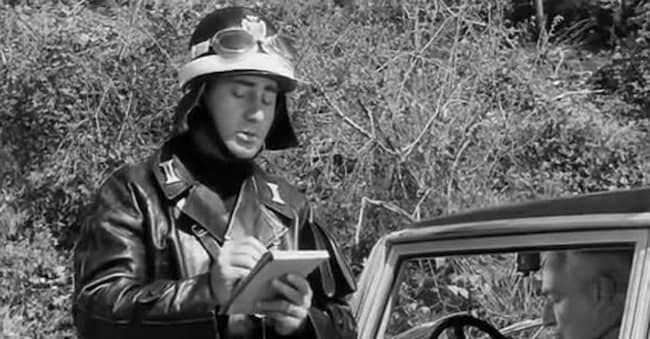
‘Clowns, buffoons, arse…holes, I want to see what you’re like when you take off your kit – I’ll be waiting for you.’ These are the words, directed at a traffic warden who was ‘replacing’ a faulty traffic light, and which led the motorist who had uttered them to appear before the courts, facing two charges insulting a public official and disrupting a public service.
However, the charges were dropped following a careful reconstruction of the facts. The Court, in fact, acquitted the exasperated driver outright, stating: ‘Because the offence does not exist’. So is the insult now deemed acceptable? It depends. In this specific case, the Court of Cassation rejected the appeal by the public prosecutor’s office, which had challenged the verdict in favour of the defendant, who – according to the prosecutor – was guilty of, if not obstructing, then at least disrupting a public service, given that the altercation had prevented the traffic warden from regulating traffic. Added to this were the offences of insulting a public official whilst on duty and refusing to provide personal details .
It is the public official who insults first
The judges’ account of events – which was upheld by the Supreme Court – was very different. In the altercation – the Court states – ‘the traffic warden was the first to engage in arbitrary conduct, consisting of shouting at (omissis) using language unsuitable for the performance of his duties’. The traffic warden then moved from words to action. And, with the help of a colleague, he had attempted to restrain the defendant, who had wriggled free; it was only after this entirely arbitrary attempt at “arrest” that the verbal tirade began.
The acquittal therefore stems from the clear illegality of the conduct of the public officials. A traffic warden may, in fact, “stop” a member of the public in caught in the act. And certainly not because he believes the driver is behaving in a manner not entirely in line with the Highway Code, or that he is not fully complying with his hand signals, or because he is showing a certain impatience with the management of the traffic jam. In the face of this abuse, it is irrelevant that the insults were heard by several people. Nor is it true that the traffic wardens asked the driver for his personal details, just as the obstruction to the public service was entirely negligible.

