

Do you have diabetes? You are excluded from military sports groups due to old regulations from 1932
Athletes Anna Arnaudo and Monica Priore in the Senate: 'Overcome written rules in a medical-scientific context that no longer exists, personal evaluation is needed'

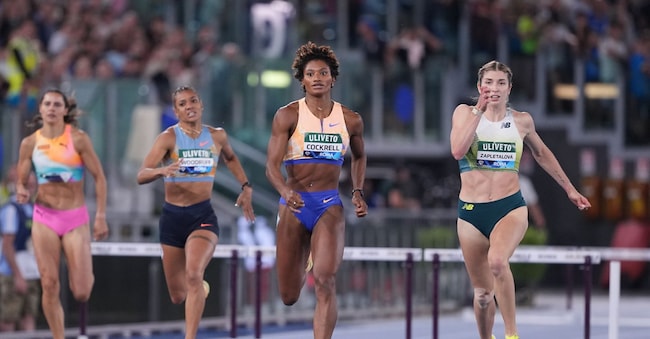
'I have been competing internationally for years and representing Italia while living with type 1 diabetes, which I manage thanks to the technology available today. Nevertheless, this diagnosis excludes me and other athletes from military sports groups automatically and independently of actual clinical conditions and sports results'. These are the words of Anna Arnaudo, athletics champion with type 1 diabetes and Ambassador of the Federation of Italian Diabetes Societies (FeSDI), heard with Monica Priore, athlete and vice-president of Diabetes Italia, by the Joint Committees on Foreign Affairs and Culture, expressing an unease that goes back a long way. 'Being excluded not on the basis of an individual assessment,' she explained, 'but on the basis of a 1932 rule, is a contradiction that can and must be overcome today.
Paralympic athletes
In fact, it is precisely because of regulatory criteria dating back to a Royal Decree of 1932, drawn up in a medical-scientific context that no longer exists, that athletes who are fully clinically and sportingly fit are excluded from military sports groups simply because they have diabetes.
Now, however, things could also change because Legislative Decree 36/2021 has opened military sports groups to Paralympic athletes, proving that a reform is possible. "FeSDI - underlines president Salvatore De Cosmo - also through its Ambassadors, symbol of sporting and human talent, asks Parliament to take the same step for athletes with diabetes, introducing individual medical-sports evaluation criteria instead of the automatic exclusion mechanisms still in force".
'There are so many Italian athletes with diabetes who already represent the country in international competitions, without however being able to access the support and growth paths that military sports groups guarantee,' continued De Cosmo. 'This is a paradox that penalises national sporting talent and contradicts the principles of fairness and individual assessment already affirmed by case law and the European legal system.
The example of tennis player Zverev
There is an emblematic example in tennis and it concerns the German champion Alexandrer Zverev, who was diagnosed with type 1 diabetes when he was only four years old, in which the immune system destroys the pancreas cells that produce insulin, causing a deficiency of this hormone that is essential for sugar metabolism. 'When I was diagnosed, about twenty years ago, the situation was different and playing a sport like tennis was considered impossible,' Zverev explains. 'Technology and drugs have made huge steps forward. So I am living my dream, but I am not the only example of an athlete with diabetes. And today there is no reason why children and adults with diabetes cannot live their lives to the fullest'.

