
Young Factor Europe: six countries learn about finance
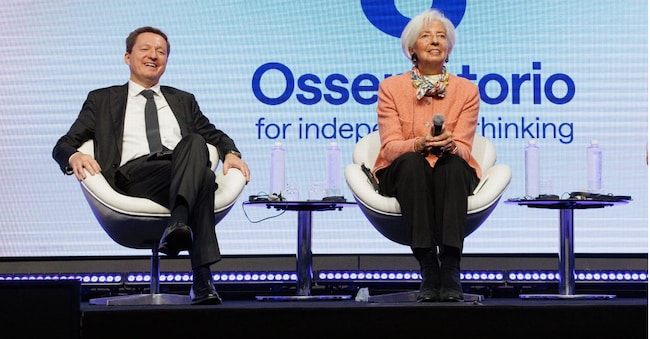
The new edition was presented to an audience of 600 students. The programme features 50 key terms. Lagarde (ECB): “Thank you to the Observatory for its work on economic and financial literacy.”

Key points
Understanding economics and finance to shape your future. Young Factor Europe brings economic and financial education to secondary schools in six countries, with a free platform and a programme based on 50 key terms. Andrea Ceccherini, founder and president of Osservatorio for Independent Thinking, presented the new edition in Milan in the presence of ECB President Christine Lagarde and 600 students.
Ceccherini: ‘An exercise in participating in democratic life’
The stakes go beyond simply managing one’s savings: ‘Studying finance and economics,’ explains Ceccherini, ‘is now essential for participating fully in democracy’. Economic and financial literacy, commented the ECB President, is “an issue that is particularly close to my heart and which I consider an essential component of freedom: in particular for women, understanding financial instruments and possessing the necessary skills to manage one’s own resources means being able to make independent choices and decide one’s own future’. Hence her ‘thanks’ to the Observatory for the initiative’s great civic value and ‘for the work it is doing’.
The Fifty Words
The project is at an advanced pilot stage in Italia, Germany and Spain, and has been launched in France, the Netherlands and Portugal. In Italia, the project is supported by Intesa Sanpaolo and UniCredit, and Crédit Agricole Italia will also be joining them.
At the heart of the programme are 50 words, explained and illustrated, which are covered over five years: tests to assess knowledge, video lessons, current affairs, masterclasses led by central bank governors and practical activities. Teachers and students have access to articles from the Financial Times, The Economist, the Wall Street Journal and Sole 24 Ore via the Doubt and Debate.
Lagarde: ‘Financial matters are still poorly understood’
Just how necessary this ‘financial literacy’ is is highlighted by Lagarde herself when speaking to students in Milan: in Europe, she observes, ‘50 per cent of citizens have a very limited understanding of financial matters. Some people struggle to tell the difference between a fixed and a variable rate’. These gaps affect people’s ability to assess an offer, manage their own finances and make informed decisions.


