Tax delegation

Zero-cost fiscal federalism meets with opposition from local authorities and regions

Today, the Council of Ministers will discuss the implementing decree on taxation, followed by a rush through Parliament for opinions and final approval. Mayors and regional presidents reject the static IRPEF revenue-sharing arrangements

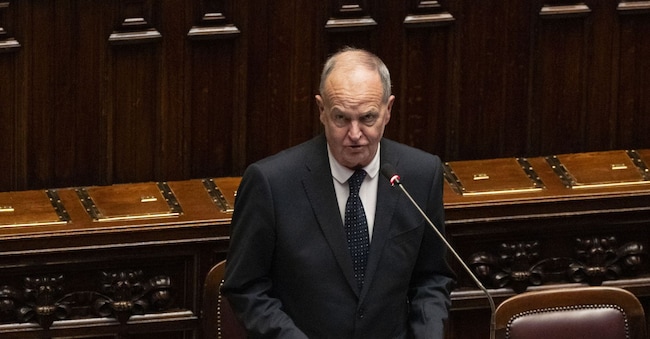
Roberto Calderoli, ministro per gli Affari regionali e le Autonomie della repubblica IMAGOECONOMICA

4' min read

Translated by AI
Versione italiana

4' min read

Translated by AI
Versione italiana

With one month to go until the deadline for implementing the fiscal delegation, the federalist chapter is also entering the final stretch. The text of the legislative decree, revised and amended from the first version approved by the Government on 9 May 2025 and subsequently blocked due to a lack of agreement with the regions and local authorities, will be considered today by the Council of Ministers.

There will then be a race through Parliament to secure the committee’s opinions, before the final go-ahead, which could come from the last Cabinet meeting before the summer recess, on 4 August, or at the latest at the next one, at the end of the same month.

Loading...

After a year and three months of stagnation

Such a flurry of activity suddenly emerged after more than 15 months of stagnation; during which the decree also lost some key provisions, such as local scrappage schemes – which were transferred to the previous Budget Act – and the rules on the provincial registration tax for long-term hire cars, which were moved to the May tax decree.

‘25 years on from the reform of Title V’

The main obstacle was posed by the IRPEF co-payments, which were intended to give local accounts a ‘federalist’ character. And this obstacle has not been overcome, as demonstrated by the fact that, at yesterday’s Unified Conference, the measure failed to secure the agreement of the local authorities.

“After 25 years (since the reform of Title V, ed.), it was necessary to move forward, but you make polenta with the flour you have to hand,” comments Roberto Calderoli, Minister for Regional Affairs and Autonomies and the architect of the operation, drawing on the wisdom of the Po Valley.

The crux of the matter is financial, as Calderoli himself explains when he argues that ‘it really is like squaring the circle to combine financial autonomy with a balanced budget without running the risk of increasing the tax burden’. Because, in theory, federalism aims to improve efficiency and reduce costs. But in practice, it can raise significant uncertainties regarding the public finances.

The financial hub

To understand where the problem lies, we need to unpick the financial mechanism at the heart of the matter. In federalist models, local authorities do not receive transfers from the State – as is typical of a hierarchical structure in which the periphery depends on the centre – but ‘share’ in tax revenue, a portion of which is allocated to them.

This development has been under discussion since 2009, when the fourth Berlusconi government – under the leadership of the current Minister for Regional Affairs and Autonomies, Roberto Calderoli – approved the enabling act on federalism. However, in 17 years it has never been implemented, due to the difficulties highlighted by this latest attempt.

As it cannot place a burden on the public finances, the decree introduces zero-cost cost-sharing arrangements: in practice, local authorities are allocated IRPEF quotas equal to the transfers that are cancelled, with a predefined absolute value that remains fixed over time.

It was precisely this aspect that prompted objections from local authorities, which were calling for ‘dynamic’ revenue-sharing arrangements – that is, ones that would grow in line with the IRPEF tax base, which, barring serious crises, increases year on year. However, such a mechanism would have required the state budget to forgo a share of this projected increase in revenue, thereby necessitating funding arrangements that would be difficult to quantify in advance and, in any case, unavailable.

Loading...

Funds that are changing their look

The Regions are to receive an IRPEF share of 5.828 billion, which replaces the 5.259 billion from the national fund for local public transport, the 424 million from the non-healthcare portion of the VAT share, the 110 million for the free provision of school textbooks and the 34 million from the single fund for the right to education.

The IRPEF allocated to the provinces is worth 1.802 billion in 2027, and will rise gradually to the 2.111 billion forecast for 2030 to compensate for the phasing out of the surcharge on motor insurance, which is not being abolished but nationalised. No co-financing is planned for local authorities, and indeed, mayors view the phasing out of the current local transport fund with concern: a substantial portion of which (2.6 billion according to ANCI-IFEL calculations) currently passes through the regions but reaches the municipalities, and under the new system would lose its earmarked status.

In an attempt to address local concerns, the draft bill due to be discussed today by the Council of Ministers will promise a second phase in the move towards federalism. For the regions, this would begin in 2028, when, based on monitoring, ‘the co-financing rates may be revised to take account of fluctuations in personal income tax revenue’; whilst a ‘technical working group on the taxation of transfers’ is expected to deal with the municipalities. It is the best that can be done with the ‘polenta on the table’: but it is enough for those at the table.

As can be seen, this is a highly technical issue. But at its core lies a strong political dimension, particularly dear to the Lega, which was unwilling to abandon the federalist cause and thus scuppered the idea – conceived by the Ministry of Finance – of scrapping revenue-sharing arrangements in order to secure approval for the other changes to local taxes (as outlined in the other articles on this page). The same consideration has influenced the position of the Regions.

Last year, the technical committee had expressed clear opposition. Yesterday, during the political session of the Unified Council, opinions were divided, with the centre-right local authorities voting in favour; however, this did not alter the outcome, as the agreement requires unanimity.

In any case, the Regions have drawn up a document which, amongst other things – at least in the draft versions circulated yesterday – highlights the ‘serious concerns regarding the equalisation fund’ for local transport, and argues that cost-sharing arrangements conceived in this way represent ‘a substantial step backwards in terms of autonomy’. A ‘no’ has also been voiced by local councils and provincial authorities.

This does not halt the reform process, which is in fact now set to enter the final sprint towards approval. But it is clear that the failure of those directly affected to reach an agreement casts a much darker shadow over the federalist cause.

Copyright reserved ©
Loading...

Brand connect

Loading...

Newsletter

Notizie e approfondimenti sugli avvenimenti politici, economici e finanziari.

Iscriviti