
10 March 1946: how the vote for women was a revolution
The decree 80 years ago also allowed women to be elected: the spring round of elections anticipated the crucial one on 2 June

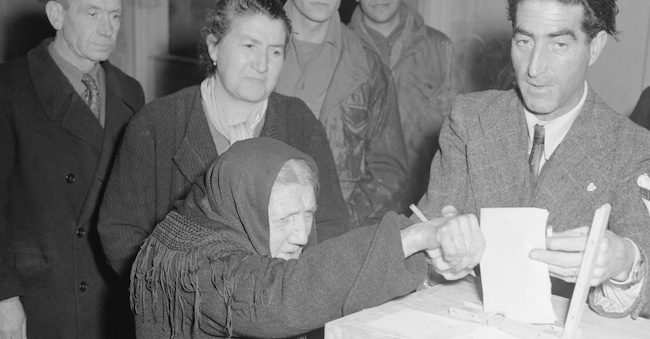
Before 2 June 1946, there is another key date carved into our civil calendar: three months earlier, 10 March, when the decree was approved allowing Italians not only to vote (a right already acquired on 1 February 1945) but also to be elected. A revolution.
Women were able to enter the political arena alongside men with their views, their commitment and their goals. More than two thousand of them were elected in the administrative elections between 10 March and 7 April 1946, when more than 5,700 municipalities went to the polls.
These were the first free elections since 1921. On 2 June, twenty-one candidates (out of a total of 556 elected) were chosen for the Constituent Assembly and left their mark on some of the fundamental articles of the Constitution.
The response of the Italians
In spite of the prudence of the parties, who feared that recognising the vote for women was not strategic (the PCI thought it would benefit Catholics, there was a general feeling that there would be a strong abstentionism), Italians went en masse to vote.
The women's associations, starting with the communist Udi (Italian Women's Union) and the Christian Democrat CIF (Italian Women's Centre), had carried out widespread dissemination and awareness-raising activities regarding the vote, making Italians aware of the crucial importance of that moment.


