
Anne Carson, a poet following in the footsteps of Sappho, wins the 2026 Nobel Prize in Literature
The Canadian writer has revitalised classical culture in seminal works such as *Eros: The Bittersweet* and *An Autobiography of Red*

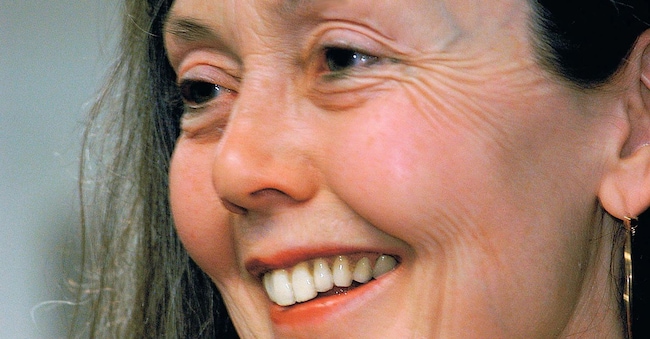
The 2026 Nobel Prize in Literature has been awarded to the Canadian writer Anne Carson, ‘for her bold and creative work which, in a playful dialogue with the classical tradition, has given rise to new forms of contemporary literature’. The announcement comes from Stockholm, following a decision by the Swedish Academy.
The author learnt she had won the prize shortly before the official announcement. “She had time to tell me that she is currently in Iceland, listening to the wind,” said Ingrid Carlberg, the Academy’s permanent secretary, at a press conference, having spoken to the Canadian writer on the telephone. “She was surprised, but very happy. I could tell from her voice.”
Poet, essayist, translator, scholar of the ancient world, university lecturer and tireless innovator, Anne Carson has, over the last forty years, built up a body of work that brings into dialogue Sappho and contemporary culture, Greek myth and everyday life, academia and romantic passion.
Born in Toronto in 1950, Carson often recounts how she was captivated by the charm of the Greek language from a very early age. It was a secondary school Latin teacher who introduced her to that world, which would later become the centre of her intellectual life. After a somewhat erratic course of study in Toronto, which she abandoned and resumed on several occasions, she went on to obtain a bachelor’s degree, a master’s degree and a PhD in classical studies, subsequently completing her education at the University of St Andrews.
She has had a distinguished academic career. She has taught at some of North America’s leading universities, including Princeton University, McGill University, the University of Michigan and New York University. But it would be a mistake to reduce Carson to the role of a scholar. In her books, philology is never merely a specialist pursuit: it is a living discipline, a tool for exploring the great questions of existence.

