

The budget allocates an additional 2.4 billion to the National Health Service, with lower payback rates for companies investing in Italia
The funds will primarily be used to increase the capacity of the Health Fund, which will reach 146.3 billion. Higher salaries for doctors working in A&E

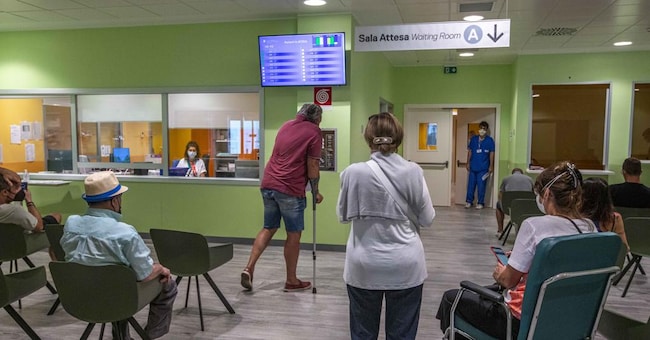
People aged 75 and over who receive a pension of up to 28,000 euros a year will receive a 300-euro voucher, which they can use to pay for healthcare costs not covered by the National Health Service: thanks to this card, older people will be able, for example, to pay directly for dental appointments or to purchase dentures, as well as for the patient contribution on prescription medicines and specialist consultations. This measure will benefit 5.5 million people at a total cost of 1.6 billion euros. A symbolic social measure – strongly championed by Forza Italia – which will not affect the resources available to the NHS, which, under the new Budget Law, will instead receive an additional 2.4 billion for 2027 (the exact figure already set out in the Draft Finance Plan), to which is added one billion inherited from last year’s budget. This latter figure covers roughly half of what the Minister of Health Orazio Schillaci had requested; however, he is already stepping up the pressure to secure a further billion, bringing the additional allocation to 3.4 billion.
The funds will primarily be used to increase the capacity of the Health Fund, which underpins the National Health Service (SSN) and will reach 146.3 billion – a figure the regions consider insufficient. The additional funds will also be used to increase doctors’ salaries, particularly those of A&E staff, whose allowances had already been raised under the budget measures introduced two years ago. Funding will also be provided for the dementia and Alzheimer’s plan and for the updating of hospital tariffs. Then there is the issue of the ‘payback’ scheme payable by pharmaceutical companies and medical device manufacturers, which is expected to amount to 1.4 billion: there will be an increase in spending caps, and whilst the idea of setting a maximum cap on the payback (at 1.6 billion) for the pharmaceutical sector appears to have been shelved for now, it is expected that this cap will be lowered for companies investing in our country. Meanwhile, the aim is to make the most of the resources from the Innovative Medicines Fund, which has never been fully utilised. ‘With this budget bill too, we are reaffirming the government’s commitment to healthcare and to the most vulnerable,’ said Schillaci yesterday.


